In Pictures: Tarpon Springs, where sponges are all-important
By Tom Adkinson
Mar 13, 2026
 |
|---|
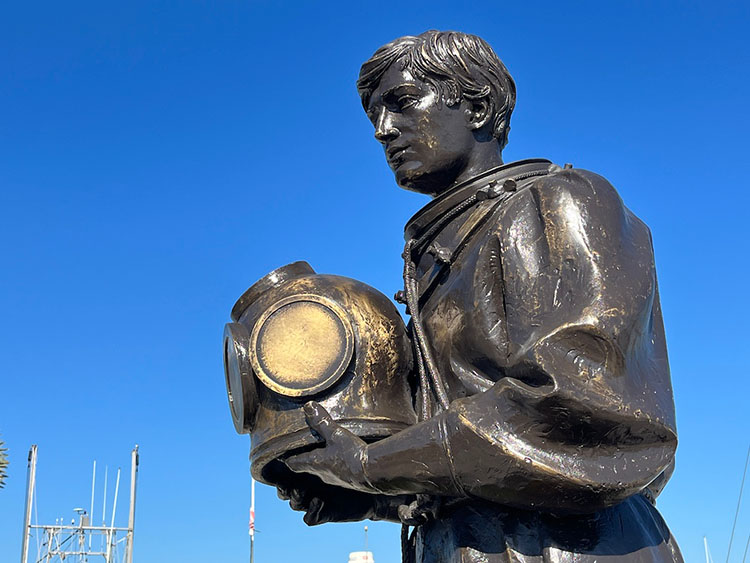
TARPON SPRINGS, Fla. – The visitor industry in this Gulf of Mexico community north of St. Petersburg is built on a solid foundation of immigrant history and a modern façade of kitsch. The combination means you can enjoy both sets of vibes or even ignore one if you choose. Greek sponge divers who arrived in the early 1900s laid the town’s foundation. At one point, 90 percent of the world’s natural sponges came from Tarpon Springs, harvested by intrepid men wearing brass diving helmets and tethered to the surface by air hoses.
Those Greek pioneers explain why buildings and boats are blue and white – the colors of the Greek flag and the look of the Greek Isles – and why restaurants such as Hellas and Mykonos are famous for youvetsi (lamb stew over orzo), grilled octopus, garlic lamb, horiatiki (baked chicken), spanakopita, and baklava. Street signs are in Greek and English, the percentage of residents with Greek heritage is off the charts, and the main part of town is on the National Register of Historic Places. The kitsch comes from t-shirt and souvenir shops, and plenty of places to buy sponges. The sponge saturation is so substantial that the sports teams at Tarpon Springs High School are, wait for it, the Spongers.
| Baklava by the tray |
|---|
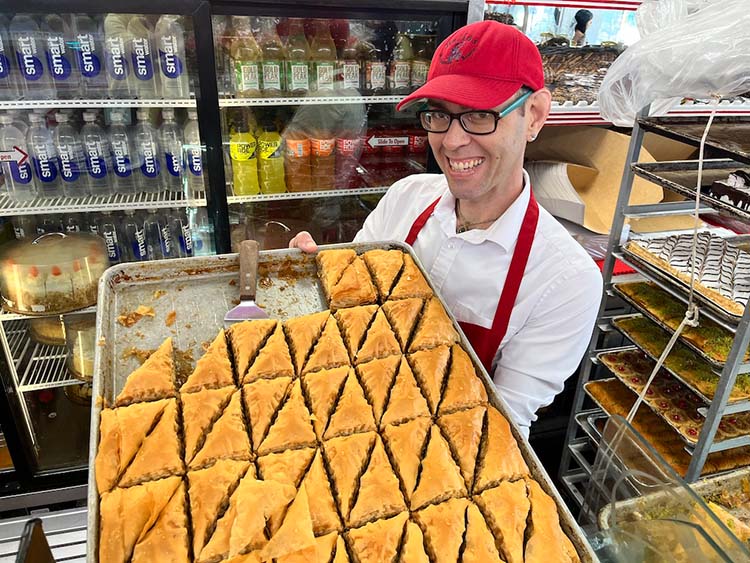 |
A staffer at Hellas Restaurant and Bakery shows off a tray of sweet and sticky baklava made just blocks off the main street in Tarpon Springs. Image by Tom Adkinson
Sponge boat on the river |
|---|
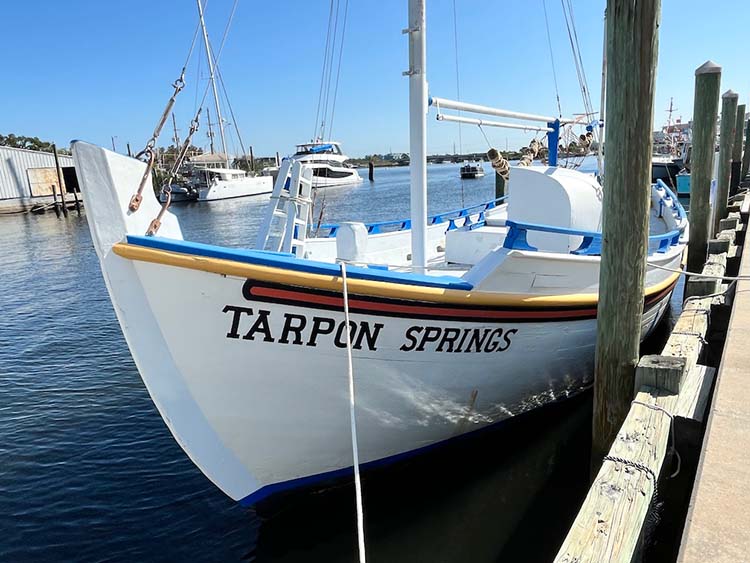 |
A Tarpon Springs sponge boat is tied up on the Anclote River directly beside the main street in Tarpon Springs. The river and nearby waters of the Gulf of Mexico have been prime sponge territory over the decades. Image by Tom Adkinson
| Spongeorama |
|---|
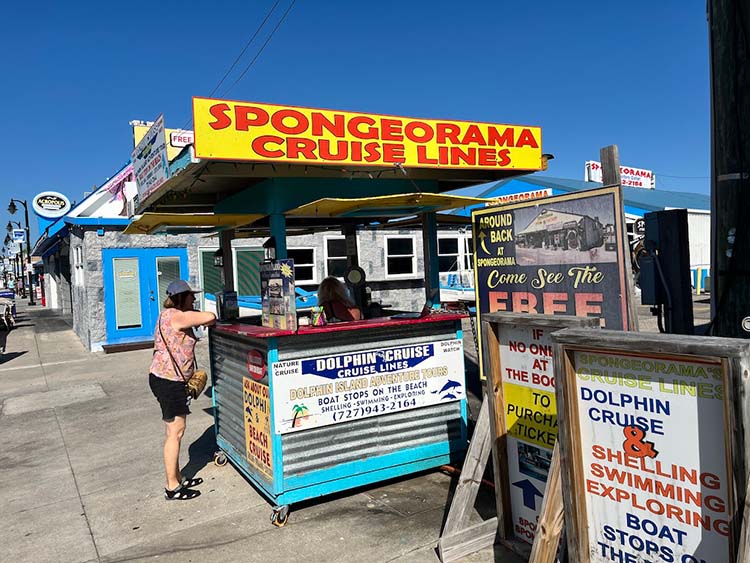 |
The Spongeorama visitor attraction, which offers a classic film about sponge divers, also sells a variety of cruises, including trips for shelling, snorkeling and dolphin watching. Image by Tom Adkinson
| Greek cuisine abounds |
|---|
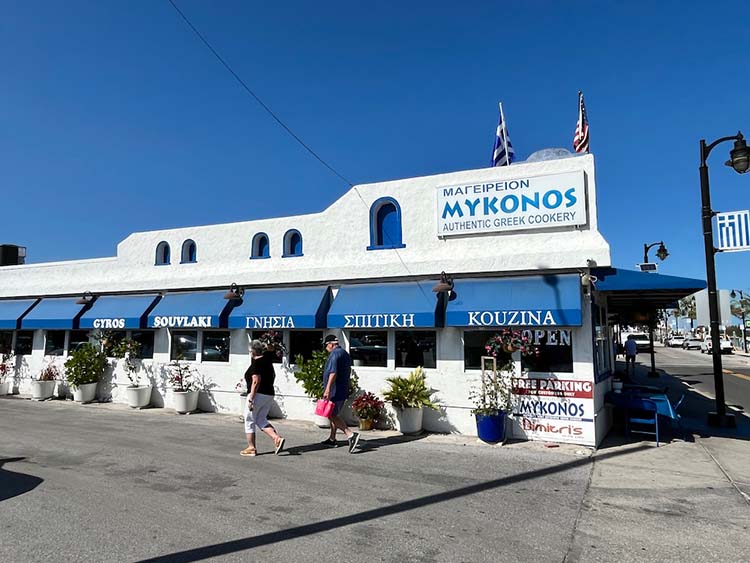 |
Mykonos delivers the look and taste of the Greek isles in Tarpon Springs, a community said to have the highest percentage of Greek-Americans in the U.S. Image by Tom Adkinson
| Reminders of the old country |
|---|
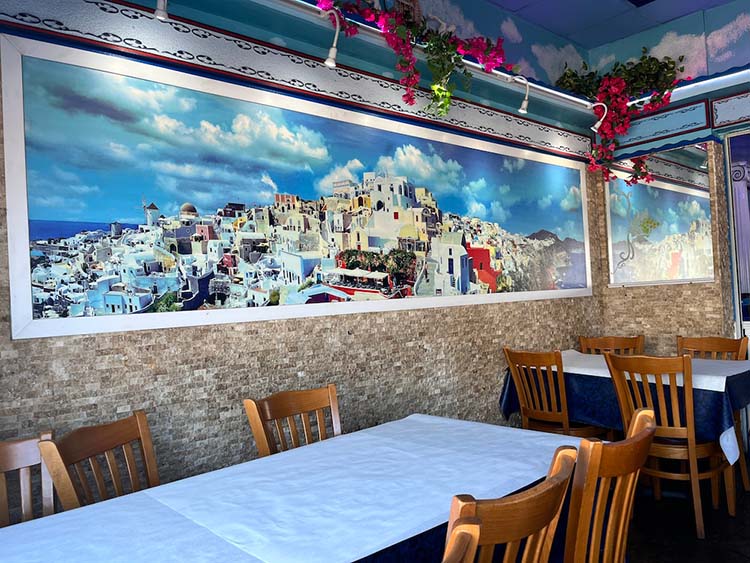 |
Murals in Tarpon Springs, including this one in an open-air portion of the Hellas Restaurant and Bakery, highlight the home country of the sponge divers to immigrated to Florida in the early 1900s. Image by Tom Adkinson
| Off to work |
|---|
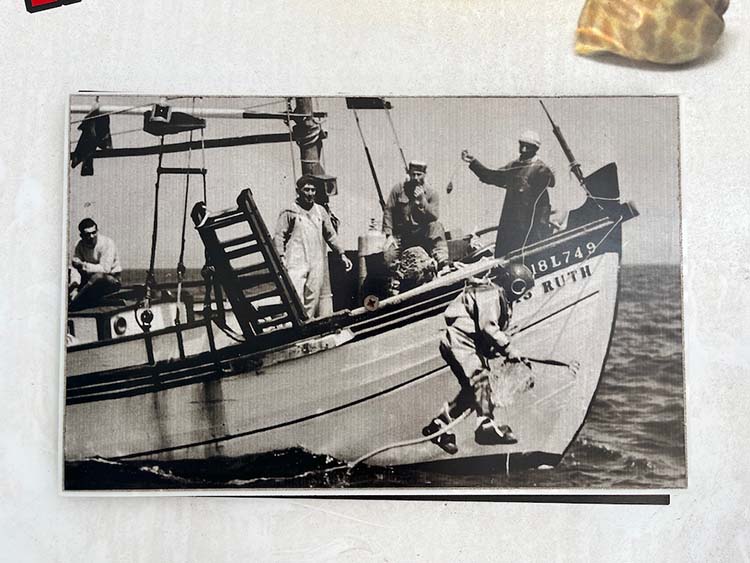 |
This historic photo in a display at the Spongeorama tourist attraction shows a sponge diver taking the last step on his walk to work. Image by Tom Adkinson
| Many sponges to choose from |
|---|
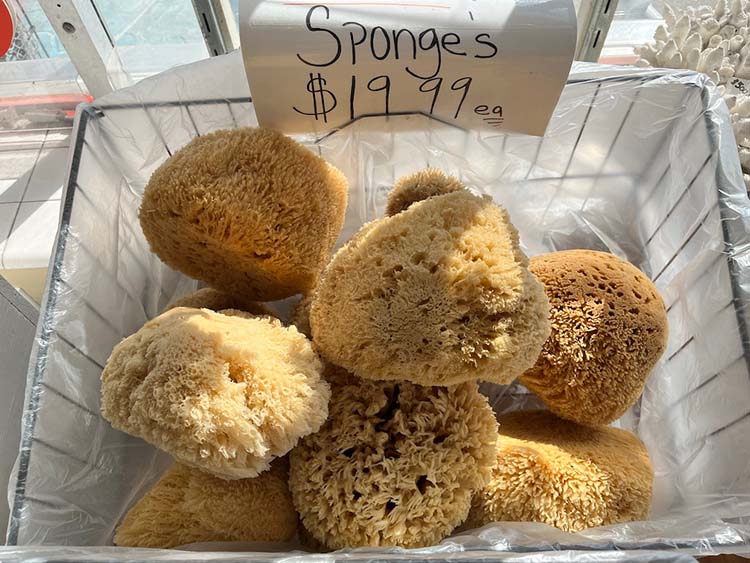 |
Real sponges are a big retail item in Tarpon Springs. “Wool” is the name of the highest-grade sponge, and they can last for years if cared for properly. Image by Tom Adkinson
Trip-planning resources: ExploreTarponSprings.com, VisitFlorida.com
(Travel writer Tom Adkinson’s book, 100 Things To Do in Nashville Before You Die, is available on Amazon.com.)