By Tom Adkinson
August 28, 2026
 |
|---|
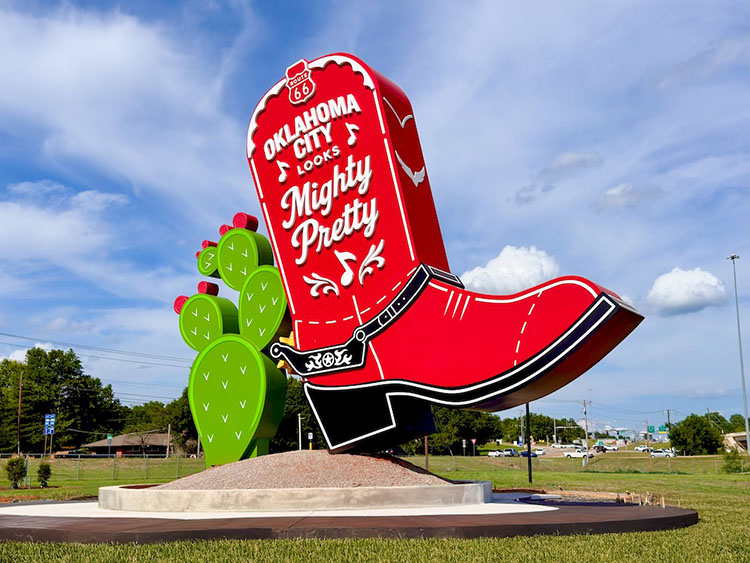
“Kicks 66” is Oklahoma City’s newest landmark. The 35-foot-tall boot statue is near the National Cowboy and Western Heritage Museum. Image from Visit OKC |
OKLAHOMA CITY – A 2016 National Geographic article explained that “flyover country” is a term that, while often used dismissively now, originated as a simple description of the middle of the country when transcontinental air travel began.
Of course, the view from 30,000 feet cannot give you a clear picture of a place such as flyover country’s Oklahoma City.
 |
|---|
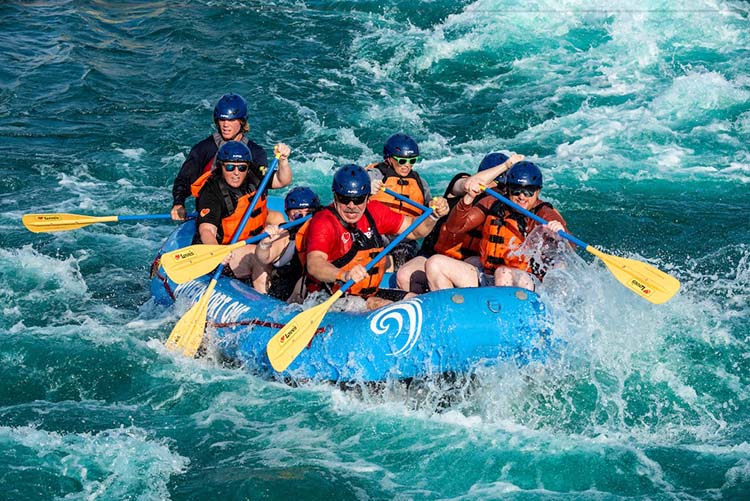
| Whitewater rafting is perhaps the most unexpected attraction in Oklahoma City, but its whitewater course is of Olympic caliber. Image from Visit OKC |
A close look at Oklahoma’s capital reveals a vibrant city that has transformed itself into a destination for leisure travel with everything from western art and the NBA’s Oklahoma City Thunder to a banjo museum and whitewater rafting. Yes, even though the whitewater is on a manmade course, the Class II-IV rapids are quite real.
Much of Oklahoma City’s visitor appeal evolved through a conscious civic effort. About 35 years ago, the city got a huge slap in the face when a major prospective employer skipped over Oklahoma City because its CEO candidly said he didn’t want to send employees to a city with so little to do.
 |
|---|
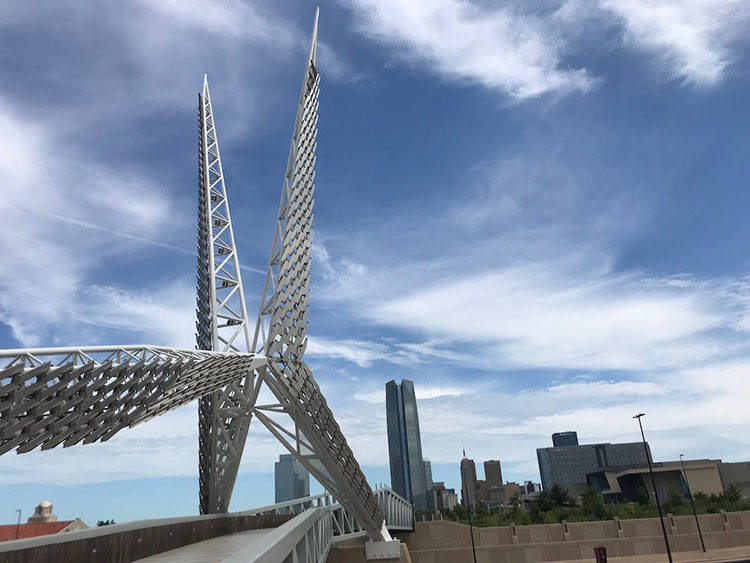
| The pedestrian Scissortail Bridge helps frame the core entertainment, recreation and business district in Oklahoma City. Image by Tom Adkinson |
The reaction? City leadership and citizens agreed to a multi-year sales tax that accumulated money for massive capital improvements, all built with cash.
Among the early additions: A downtown minor league baseball stadium (Chickasaw Bricktown Ballpark), transformation of a rundown warehouse area into Bricktown, an entertainment and dining district complete with the Bricktown Canal that carries excursion boats (think San Antonio’s Riverwalk) and development of the Boathouse District, which is a total remaking of the Oklahoma River into a kayaking, rafting and even surfing destination in the middle of the continent.
The remade river is so good that Oklahoma City will host the canoe slalom events of the 2028 Olympic Games, a long way from the true host city, Los Angeles.
 |
|---|
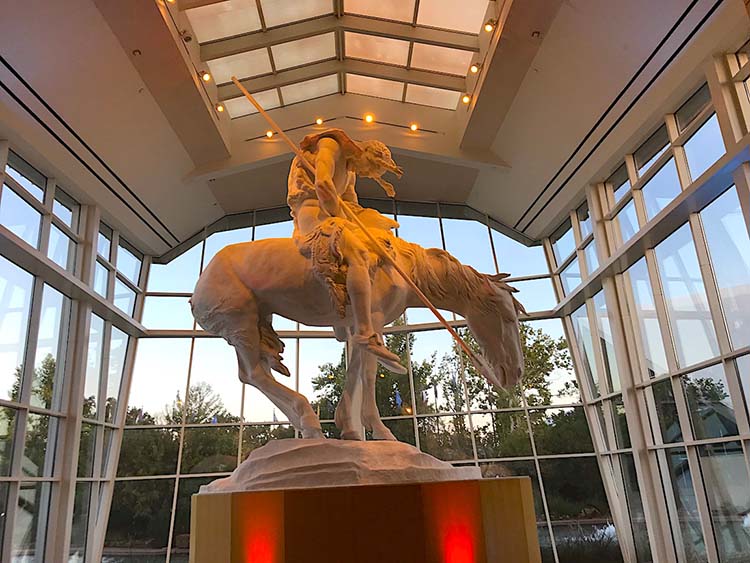
| The famous “End of the Trail” statue is one of the featured pieces in the collection of the National Cowboy and Western Heritage Museum. Image by Tom Adkinson |
Western heritage remains a bedrock attraction here because of two major institutions – the well-established National Cowboy and Western Heritage Museum and the First Americans Museum, which opened in 2021.
“The Cowboy: An Immersive Journey” is a new experience at the National Cowboy and Western Heritage Museum. The creators of “Immersive Van Gogh” and “Immersive Disney Animation” used a real cowboy’s trail journal from the late 1800s to put visitors on the Great Plains, in the Rocky Mountains and on a cattle drive.
Modern technology aside, the museum showcases classic and modern Western art. Look for works by Frederic Remington and Charles Russell, and find multiple galleries devoted to rodeos, Native American culture, firearms, the frontier military, and entertainers from movies, television, and Wild West shows.
 |
|---|
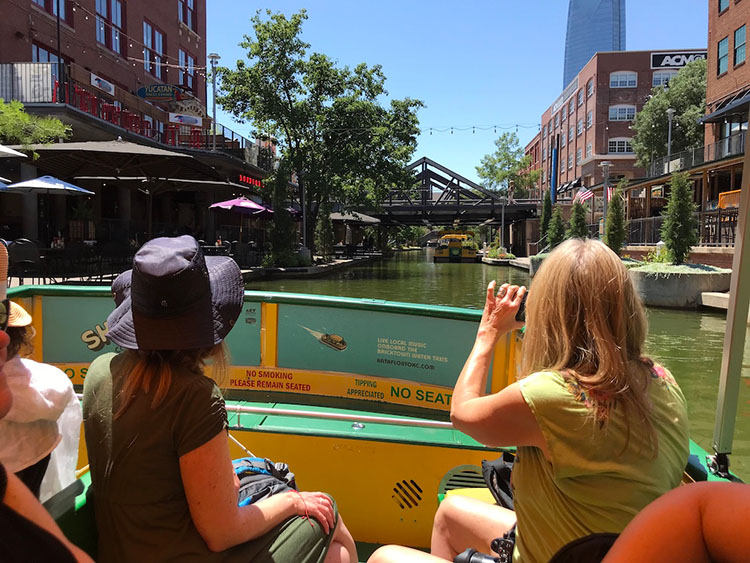
| A downtown canal with excursion boats was one of the early civic projects that helped revitalize the Bricktown area. Image by Tom Adkinson |
New in 2026 is a sculpture ready-made for anyone’s OKC souvenir photo. It is “Kicks 66,” a 35-foot-tall red cowboy boot created to honor the centennial of Route 66, which runs through Oklahoma City for 51.5 miles.
The First Americans Museum celebrates the cultures of the 39 Native American tribes in Oklahoma, most there not of their own choice.
It illuminates their cultures and histories on an impressive campus featuring a 12,000-square-foot, symbol-laden museum. Its semi-dome core area takes its inspiration from the grasshouse architecture of the area’s original Wichita tribe, and its 10 stone columns represent the distance traveled each day when tribes were forcibly removed to Indian Territory.
A semi-circular earthen mound rises behind the museum, and guided walks explain the mound-builder civilizations that thrived in North America centuries before Europeans arrived.
Oklahoma City might be the last place anyone would expect to go surfing, kayaking or whitewater rafting, but modern engineering makes those activities possible. See them at RIVERSPORT, the new-look Oklahoma River’s frothy whitewater (Class II-IV rapids) for kayaking, rafting and even tubing. Activities are accessible to visitors of all skill levels – including no skills at all. Even surfing instruction is available.
 |
|---|
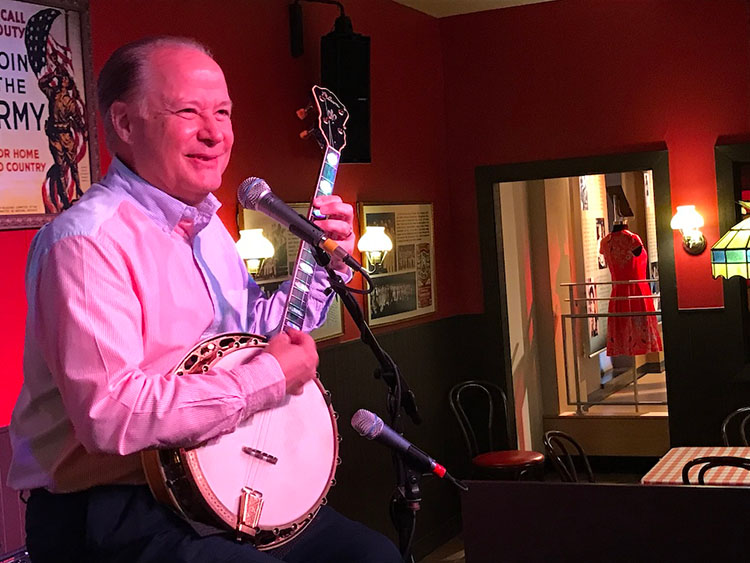
| Live performances often spice up visits to the American Banjo Museum, one of many attractions in the Bricktown district. Image by Tom Adkinson |
OKC’s Bricktown District proves how imagination, money, and an entrepreneurial spirit can transform aging warehouses into a buzzing center for sports, entertainment, and unexpected attractions such as a banjo museum. The Chickasaw Bricktown Ballpark, home of the AAA OKC Comets, and the Bricktown Canal were two early catalysts.
Excursion boats, which story-filled narrators pilot, glide along the old warehouses that now house the city’s first craft brewery, more than 45 restaurants, retail shops and amusement attractions such as Brickopolis, a three-story playground with miniature golf, arcade games and laser tag.
A quiet stretch of the canal passes where sculptor Paul Moore needed 45 larger-than-life bronze horses, wagons, and pioneers to capture the tumult of Oklahoma’s 1889 land rush.
The American Banjo Museum is another Bricktown treat. It is a serious museum with a collection of more than 400 instruments. Enslaved Africans developed the instrument that has had waves of popularity, including the Minstrel Age, the Jazz Age, and the folk music and bluegrass scene. Grandpa Jones, Steve Martin and even Dolly Parton get their due here.
Trip-planning resources: VisitOKC.com
(Travel writer Tom Adkinson’s book, 100 Things To Do in Nashville Before You Die, is available at Amazon.com.