By Tom Adkinson
Jan 30, 2026
 |
|---|
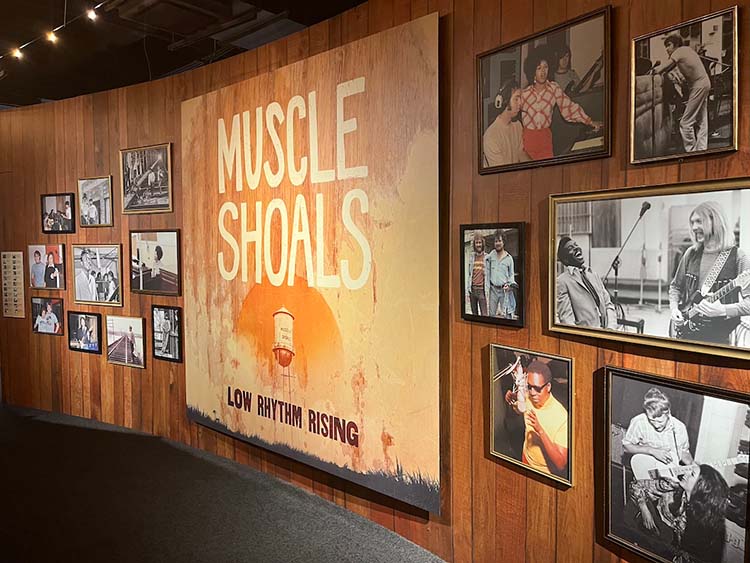
| Photographs of a handful of the musical giants who recorded in Muscle Shoals mark the entrance to “Muscle Shoals: Low Rhythm Rising.” Image by Tom Adkinson |
NASHVILLE, Tenn. – Nashville never will relinquish its nickname of “Music City,” but it doesn’t mind sharing the spotlight just a bit with another musical city that rocked the world – Muscle Shoals, Ala.
Tiny Muscle Shoals – one of four cities in a small northwest Alabama metro area that is so compressed that visitors usually don’t know, or care, which city they are in – was a cauldron of creativity from which emerged “the Muscle Shoals Sound.”
 |
|---|
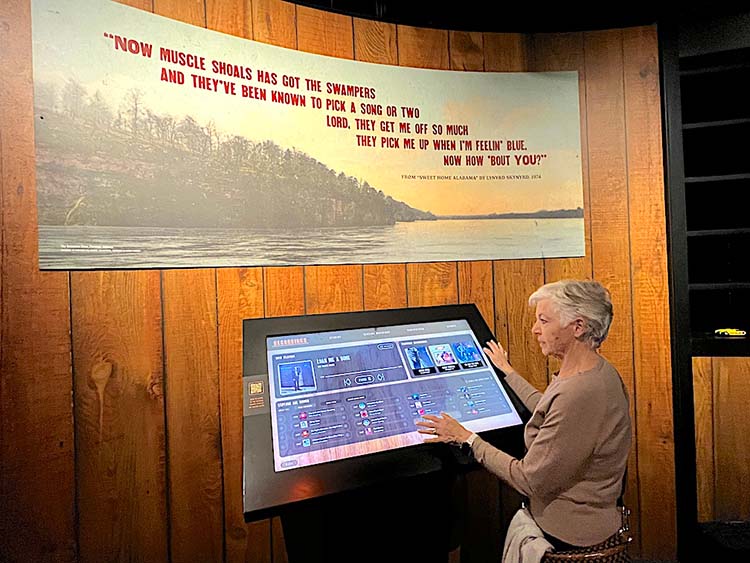
| An interactive display with hundreds of Muscle Shoals recordings can captivate museum visitors for extended stretches of time. Image by Tom Adkinson |
In the 1960s and 1970s, local Alabama musicians – performers, songwriters, producers – birthed what has been called “a swampy, Southern sound merging R&B, country, pop and more.” The fact the music even happened during an era of segregation was a miracle of sorts, but Blacks and whites made music in harmony.
That era of musical creativity and success was so significant that Nashville’s Country Music Hall of Fame and Museum researched an encyclopedic exhibition called “Muscle Shoals: Low Rhythm Rising.” It opened in late 2025 for a three-year run.
 |
|---|
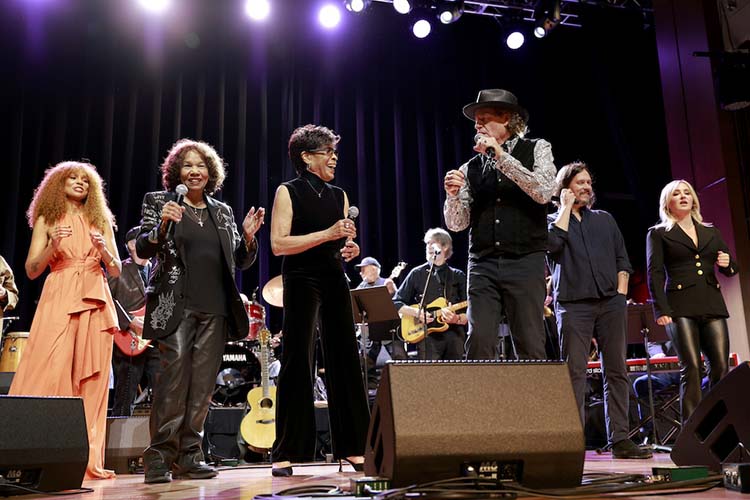
| Tiera Kennedy, Candi Staton, Bettye LaVette, Jimmy Hall, John Paul White and Maggie Rose rock out in a Muscle Shoals concert celebrating the exhibition. Image by Jason Kempin/Getty Images for the Country Music Hall of Fame and Museum |
The 5,000-square-foot exhibition defines and illuminates the Muscle Shoals Sound, which is no small challenge. The focus is on two recording studios, both of which remain active and both of which are open for tours.
The first studio was FAME Recording Studios, where Rick Hall and the Muscle Shoals Rhythm Section (four white guys) got the ball rolling. They were behind hits by Aretha Franklin, Etta James, Wilson Pickett and others. In fact, Wilson Pickett recorded three mega-hits during his first session at FAME – “Land of 1000 Dances,” “Mustang Sally” and “Funky Broadway.”
 |
|---|
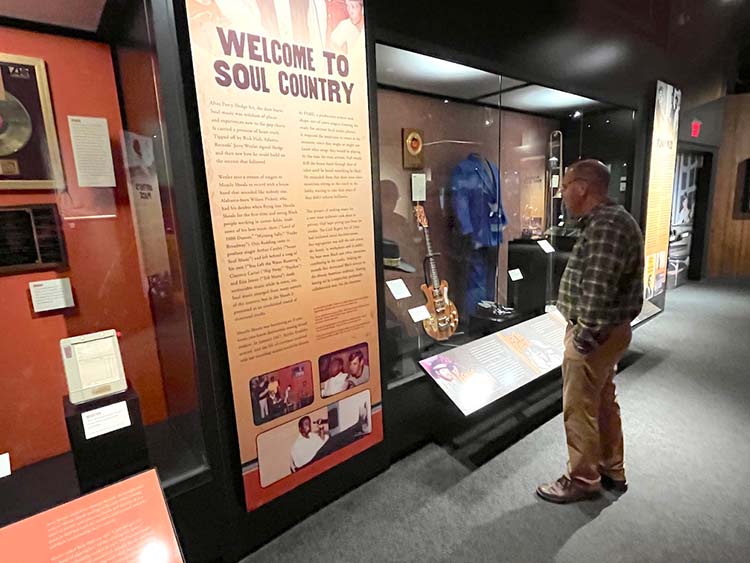
| A museum visitor pauses to read a panel about when Percy Sledge, Wilson Pickett, Otis Redding and others created music in Muscle Shoals. Image by Tom Adkinson |
The Muscle Shoals Rhythm Section, later known as the Swampers, left FAME to open their own studio, formally the Muscle Shoals Sound Studio (MSSS) but also known by its street address of 3614 Jackson Highway. FAME, MSSS and other studios delivered hits by the score.
A-list artists and their managers wanted to capture some of the Muscle Shoals studio magic, and they found their way to Alabama. Put the Rolling Stones, Bob Seger, Linda Ronstadt, Cher, Willie Nelson and Paul Simon on that list.
 |
|---|
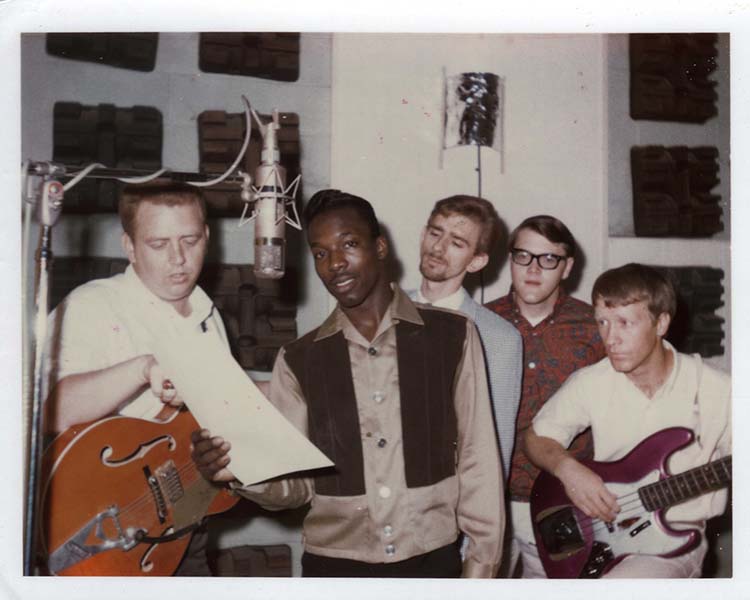
| Wilson Pickett, pictured with the Swampers, recorded three of pop music’s greatest hits during his first session at the FAME studio. Image by Rick Hall, courtesy FAME Recording Studios |
A delightful anecdote from MSSS is how Paul Simon got connected. Simon, thinking that the sound he heard had to have come from Black studio musicians in Memphis, called Stax Records there to find them. The Stax Records contact said the players Simon wanted were in Alabama, “And they’re pretty pale.” Simon went to Muscle Shoals and recorded his “Here Comes Rhymin’ Simon” album, which includes “Kodachrome.”
“In Muscle Shoals, American music crossed lines that weren’t supposed to be breached . . . . This exhibit takes an expansive look at the sound that forever changed popular music and continues to nurture a rich musical scene in northwest Alabama,” said Kyle Young, CEO of the Country Music Hall of Fame and Museum.
Grammy-winning artist Jason Isbell, himself a North Alabama native who worked at FAME, narrates the exhibition’s introductory film. Interactive elements feature audio recordings, parts of the 50 hours of interviews the Hall of Fame recorded with Muscle Shoals figures and historical artifacts.
Among the artifacts are the piano Aretha Franklin played on “I Never Loved a Man (The Way I Love You),” a Fender Stratocaster Duane Allman played when he was a studio musician at FAME and MSSS, an early draft from Mac Davis of “Baby Don’t Get Hooked on Me” and stage wear from Wilson Pickett, Dan Penn and Candi Staton.
The Country Music Hall of Fame and Museum celebrated the exhibition’s opening with a concert recalling more than 20 Muscle Shoals hits, including “I’m Your Puppet,” “When a Man Loves a Woman,” “You Better Move On,” “Wild Horses,” “The Church on Cumberland Road,” “Chain of Fools” and – of course – “Sweet Home Alabama.”
The museum plans to post a film from that concert on its website and YouTube channel. A 2013 documentary simply titled “Muscle Shoals” is on YouTube for an even deeper look into the Muscle Shoals Sound.
Trip-planning resources: CountryMusicHallOfFame.org and VisitMusicCity.com
(Travel writer Tom Adkinson’s book, 100 Things To Do in Nashville Before You Die, is available at Amazon.com.