By Tom Adkinson
Feb 27, 2026
 |
|---|
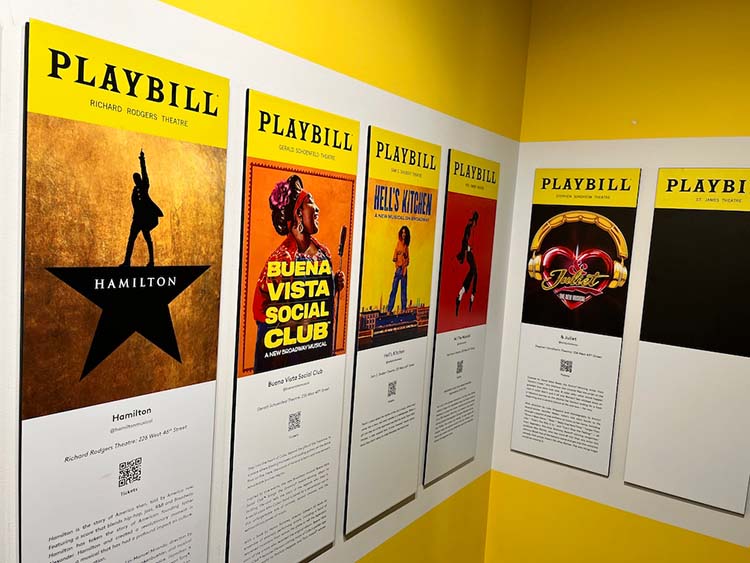
| A Playbill tells the story of every Broadway production, while the Museum of Broadway tells the story of the entire industry. Image by Tom Adkinson |
NEW YORK – Spotlights don’t illuminate actors every night in Broadway’s 41 theaters, but the spotlight always shines brightly on the theater industry itself at the Museum of Broadway, a Times Square attraction that takes you on a multi-faceted, three-level excursion through theater history, scenes from productions that are societal landmarks and the magic, toil and intelligence required to create Broadway shows.
 |
|---|
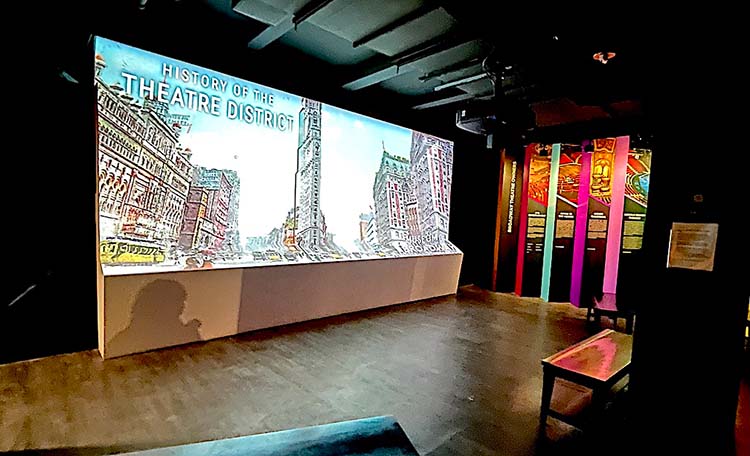
| A sparse mini-theater houses an introductory video that leads to elaborate and colorful spaces about Broadway productions. Image by Tom Adkinson |
Even if you’ve never been inside a Broadway theater, the influence of Broadway has touched you. You’ve seen a touring production of “Hamilton,” you recognize the melody of “Oh, What a Beautiful Morning” from “Oklahoma!” or you’ve seen “West Side Story” on a giant movie screen.
A list of ways Broadway intersects your life could fill pages, and many touchstones of that list fill the Museum of Broadway. School groups might race through the museum just to find photo ops of sets and costumes, but serious visitors pace themselves to study timelines and artifacts in a solid history museum.
 |
|---|
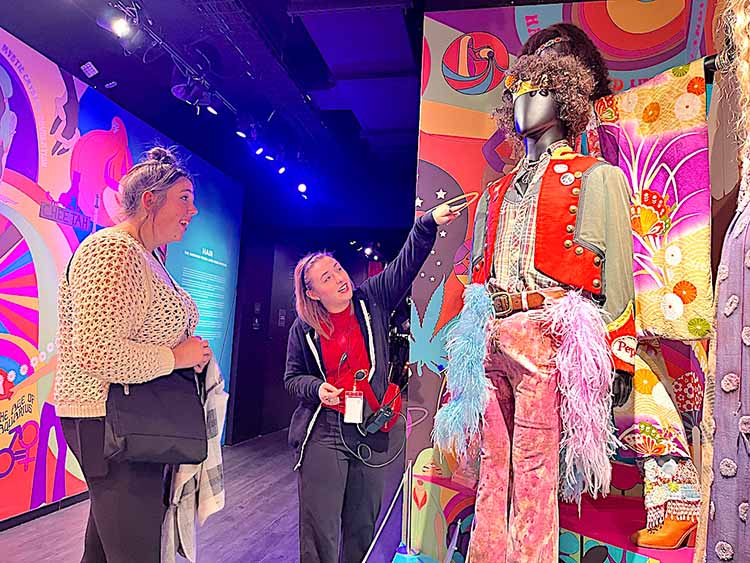
| A museum employee points out the finer points of costumes from “Hair: The American Tribal Love-Rock Musical” about the 1960s hippie counterculture. Image by Tom Adkinson |
An elevator whisks you from street level to the third floor, where you begin a descending tour. Each floor offers surprises, but it’s no surprise that the final portal deposits you in a well-curated retail store.
A short video history of the theater district sets the stage for your Broadway education. It begins with a detailed timeline of live performance in New York City. The first documented stage performance was in 1732 – even the early colonists craved entertainment – in what is now the Financial District. Over the decades, theaters moved north until they sprouted like mushrooms around Times Square. More than 70 theaters dotted the landscape in the 1920s before the stock market crash of 1929.
 |
|---|
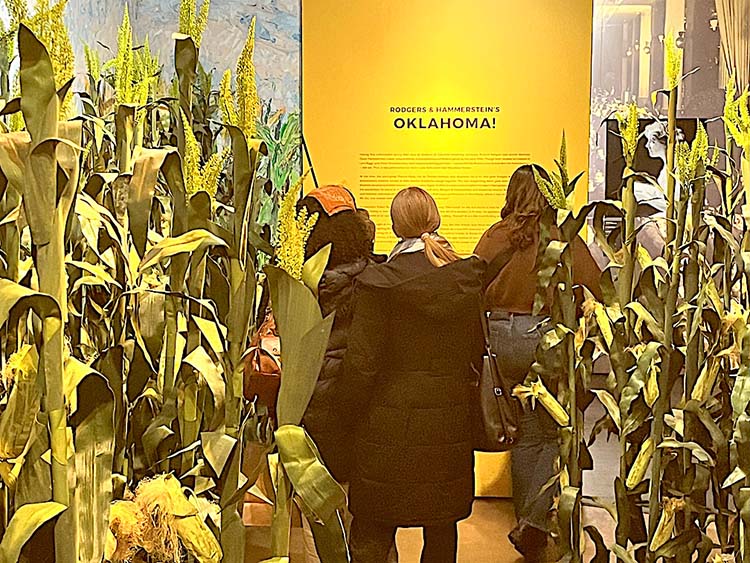
| Museum visitors of a certain age don’t need prompting to understand by a display about “Oklahoma!” is set in a cornfield. Image by Tom Adkinson |
The timeline explains how plays, musicals, vaudeville productions, and minstrel shows were part of Broadway’s evolution. One room highlights the elaborate costumes of the Ziegfeld Follies, and an informational panel explains how a vaudeville show might feature 10 independent acts in a three-hour show. It observes that performers had only minutes to wow their audiences. (That fact may have given rise to a comment often attributed to W.C. Fields about never working with children or animal acts.)
 |
|---|
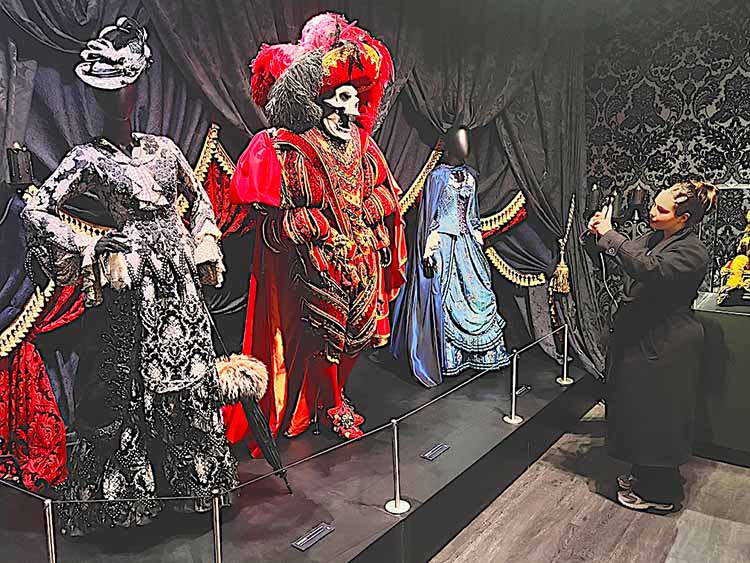
| Photographing “Phantom of the Opera” costumes might lead to scary dreams or pleasant memories. Image by Tom Adkinson |
Several rooms recognize important Broadway productions. In one, you step into a cornfield, and as music plays, you realize “the corn is as high as an elephant’s eye,” and the narrative is about “Oklahoma!” Background about that show says it had a rocky start. A scathing review after a tryout in New Haven declared it had “No gags, no gals, no chance.” By the time it opened in New York in 1943, it helped lift the nation’s spirits in the depths of World War II.
 |
|---|
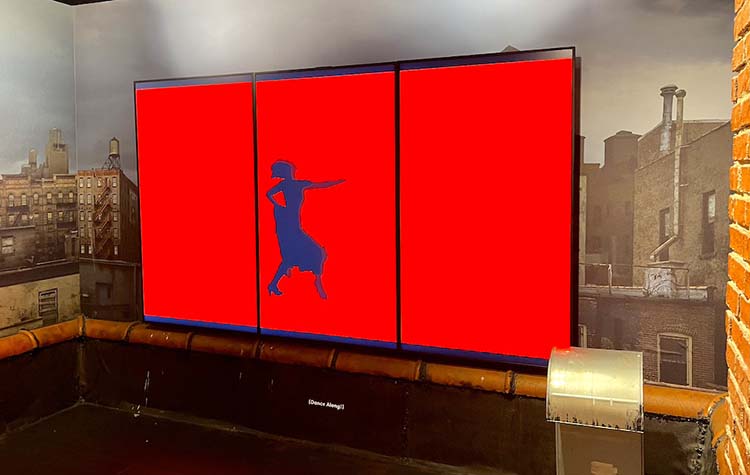
| The invitation is open for museum visitors to dance along with silhouettes while selections from “West Side Story” play. Image by Tom Adkinson |
Another room explains how “West Side Story” also didn’t have an easy path. In 1949, the idea was for a Jewish Juliet and an Irish-Catholic Romeo. That didn’t work. It re-emerged in 1957 as a rival gang story and became a theater icon. An interactive display in this room invites you to dance along with a screen silhouette to the driving Latin rhythm of “America.”
More exhibits showcase elements of “Fiddler on the Roof,” “Cabaret,” “Company,” “The Wiz,” “A Chorus Line,” “Ain’t Misbehavin’,” “La Cage Aux Folles,” “Cats” and other productions.
The museum’s final major segment examines how a show is born and how many disciplines are involved. It pays tribute to dramatists, composers, lyricists, stagehands, producers, scene designers, costume designers, hairstylists, press agents and many more. It shows clearly that mounting a Broadway show takes more than someone’s declaring enthusiastically, “Let’s write a show!”
Trip-planning resources: TheMuseumOfBroadway.com
(Travel writer Tom Adkinson’s book, 100 Things To Do in Nashville Before You Die, is available at Amazon.com.