By Tom Adkinson
November 13, 2026
 |
|---|
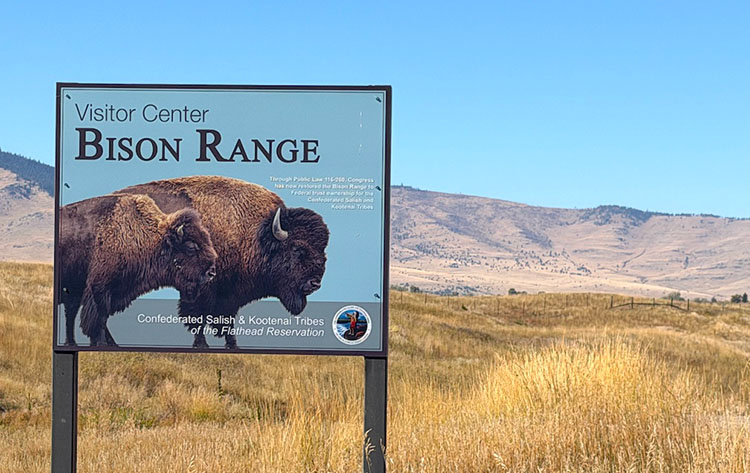
Blue sky, mountains, golden fields, and hulking symbols of the American West are the attraction at the CSKT Bison Range in Montana. Image by Tom Adkinson |
CHARLO, Mont. – Don’t say that bison are buffalo, and don’t call the CSKT Bison Range the National Bison Range. Precision dictates using proper terminology for a protected piece of the Flathead Indian Reservation that holds both a herd of treasured animals and a convoluted tale of native and non-native societies’ interaction.
The bison that are the reason this destination exists have their own convoluted history. Approximately 350 of the shaggy beasts roam 18,766 acres of beautiful Montana landscape that includes open meadows, flowing water, and peaks that reach almost 5,000 feet into the sky. It is about an hour north of Missoula.
 |
|---|
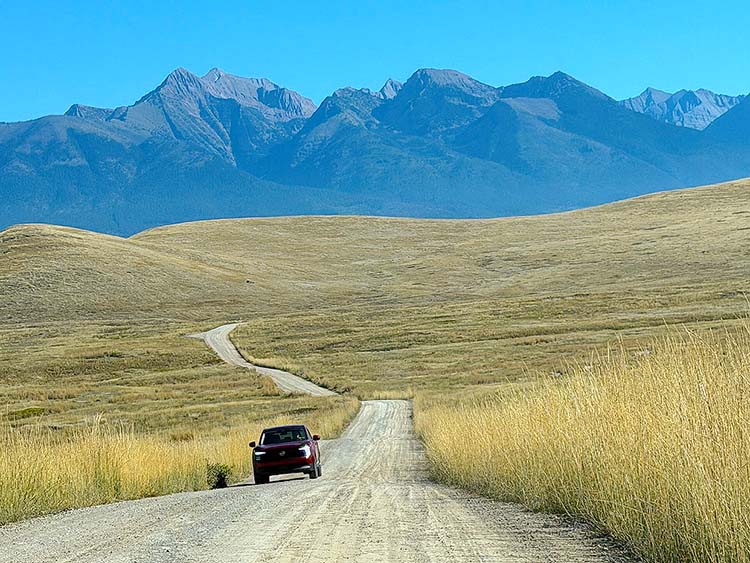
| The Prairie Drive is a 14-mile-long route through relatively flat land at about 2,500 feet elevation. The nearby peaks are almost 5,000 feet tall. Image by Tom Adkinson |
The nation is lucky that any bison exist. Documentarian Ken Burns explained that situation in his two-part film, “American Buffalo,” in which he described how America’s bison were hunted to the brink of extinction. A population that numbered perhaps 65 million in the early 1800s fell to only 77 animals toward the end of that century.
Plains Indians, themselves pushed onto reservations, recognized this tragedy, and some of them helped save the species that had been integral to their way of life. Among them was a man named Little Falcon Robe, who got permission from tribal elders to bring orphaned bison across the Continental Divide to the Flathead Reservation to start a herd.
 |
|---|
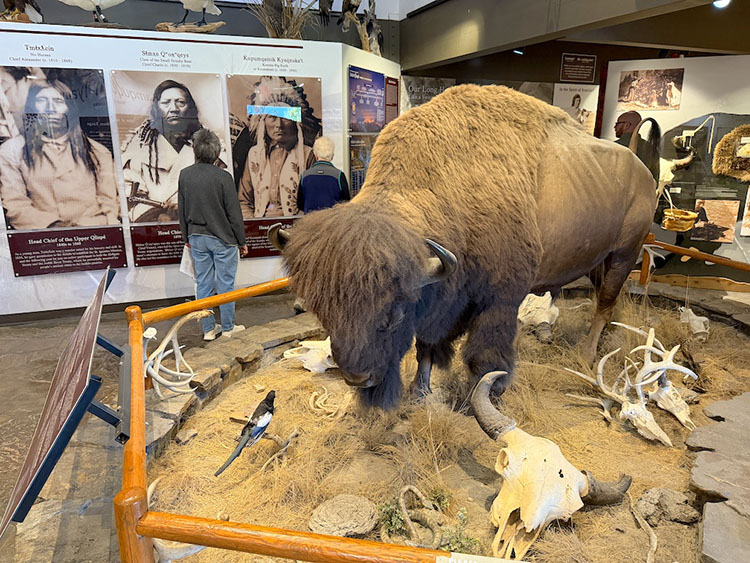
| A taxidermy bison in the range’s visitor center proves the scale of these huge animals. Bull bison can weigh 2,000 pounds and stand 6 feet at the shoulder. Image by Tom Adkinson |
That herd grew substantially. Eighteen of them went to Yellowstone National Park in 1902 to augment the park’s population of only 22 bison. Homesteading had opened the Flathead Reservation, and the herd that Little Falcon Robe had started was sold off to ranchers and the Canadian government after the U.S. government refused to buy the bison.
In a dark twist of events, the U.S. government intervened again in 1908 and appropriated land inside the reservation to establish the National Bison Range. An added insult was that Native Americans, who previously reestablished a bison herd on that land, were excluded from the bison range’s operation.
 |
|---|
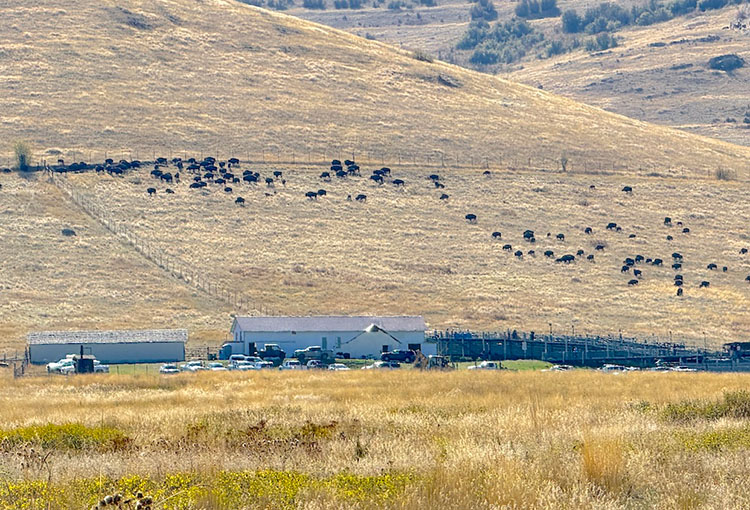
| The CSKT Bison Range periodically rounds up the herd for veterinary needs. Otherwise, the bison spread out through almost 19,000 acres of the Montana landscape. Image by Tom Adkinson |
The irony of this is that the U.S. government acquired bison from a Montana rancher whose herd included animals relocated from the reservation only a few years before.
The Consolidated Salish and Kootenai Tribes (CSKT) began seeking to partner with the U.S. Fish & Wildlife Service to manage the bison range. The relationship was rocky for the next three decades, but the bison range came under total tribal management in 2022. That explains today’s name of the CSKT Bison Range.
 |
|---|
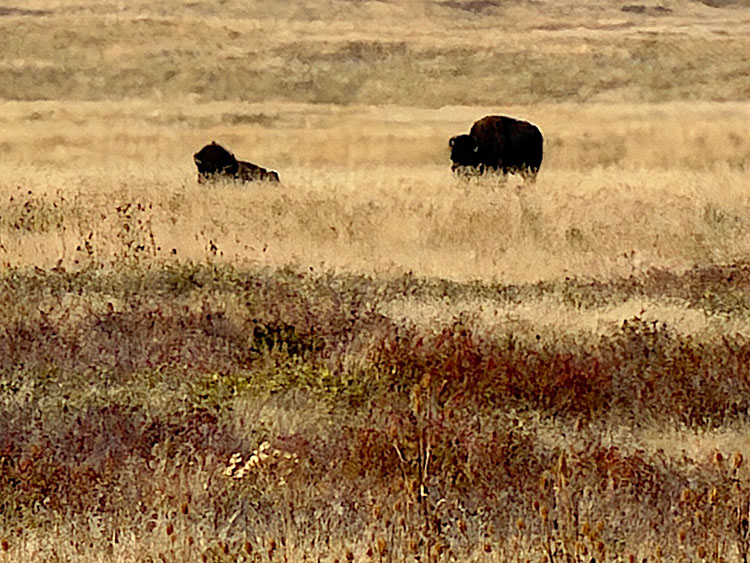
| Bull bison stand out against the golden grasses of a Montana meadow on the CSKT Bison Range. Image by Tom Adkinson |
The CSKT Bison Range certainly isn’t the only place to see free-ranging bison (Yellowstone National Park has approximately 4,800), but it is a quiet and uncrowded place – slightly off the beaten path – to explore and contemplate humans’ interaction with the natural world and themselves.
The range offers two driving routes. The 14-mile-long Prairie Drive stays at lower elevations, while the 19-mile-long Red Sleep Drive gains altitude, delivers expansive views, and leads to two short hiking trails.
 |
|---|
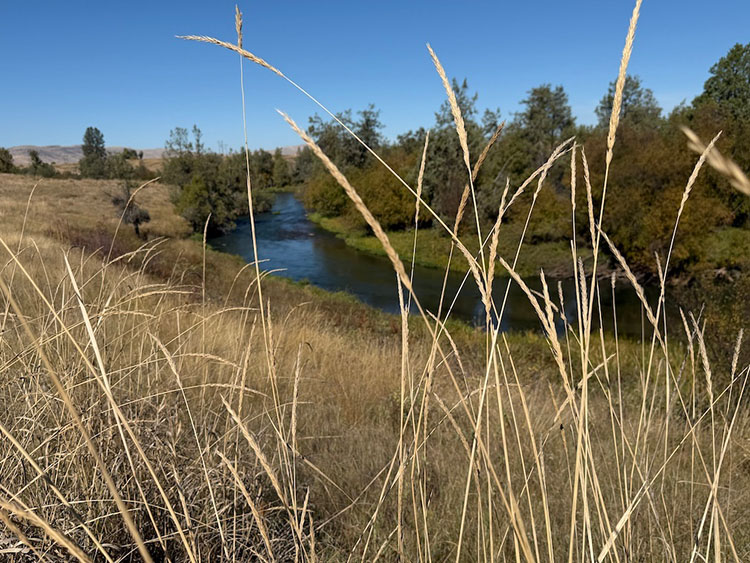
| Mission Creek drains part of the CSKT Bison Range. A small portion of the stream is open to visitors who want to see another animal species – trout. Image by Tom Adkinson |
You might see bison close to a road, out in a field, or perhaps not at all. Bison go where they want to go, and they have 18,766 acres in which to roam. Other animals on the bison range include deer, elk, pronghorns, wolves, coyotes, bears, and many bird species.
Admonitions about not getting close to bison are real. As the Ken Burns’ documentary observed, “Did you know a buffalo can clear a six-foot fence? Or hit running speeds of 35 miles per hour? These animals may look strange and slow, but they’re a souped-up hotrod of an animal hiding in a minivan shell."
Trip-planning resources: BisonRange.org and VisitMT.com
(Travel writer Tom Adkinson’s book, 100 Things To Do in Nashville Before You Die, is available at Amazon.com.