By Tom Adkinson
Mar 20, 2026
 |
|---|
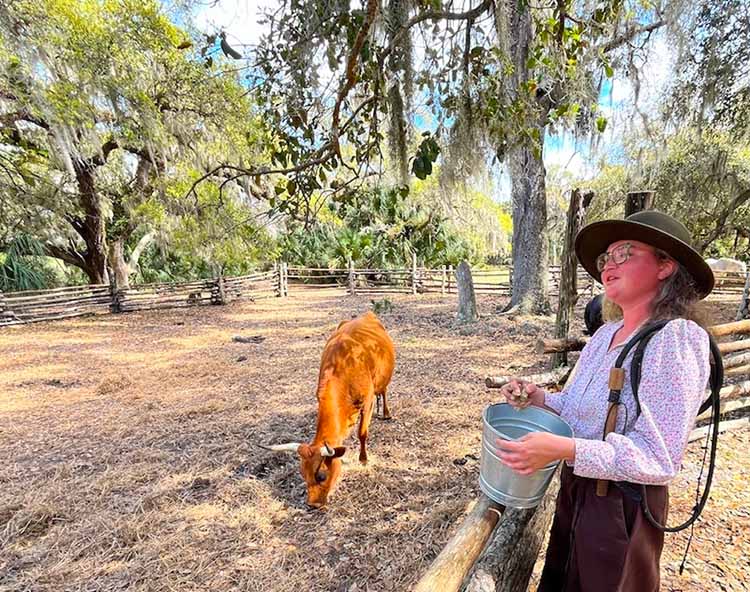
| Lake Kissimmee State Park ranger Anne Reynolds is one of several rangers who take on the personas of cow hunters from the 1870s. Image by Tom Adkinson |
LAKE WALES, Fla. – Calling someone a Florida cracker can be a compliment, a slur or a job description. At Lake Kissimmee State Park’s “Cow Camp,” it’s definitely a job description.
“Cow Camp” is the name of a living history program at the 6,000-acre state park in the middle of Florida south of Orlando and east of Tampa. Mickey Mouse, rollercoasters and fancy resorts are not in this part of the Sunshine State. Instead, it’s an area of small towns, farmland and a cattle industry whose origins are with Spanish explorers and colonists who arrived in the 1500s.
 |
|---|
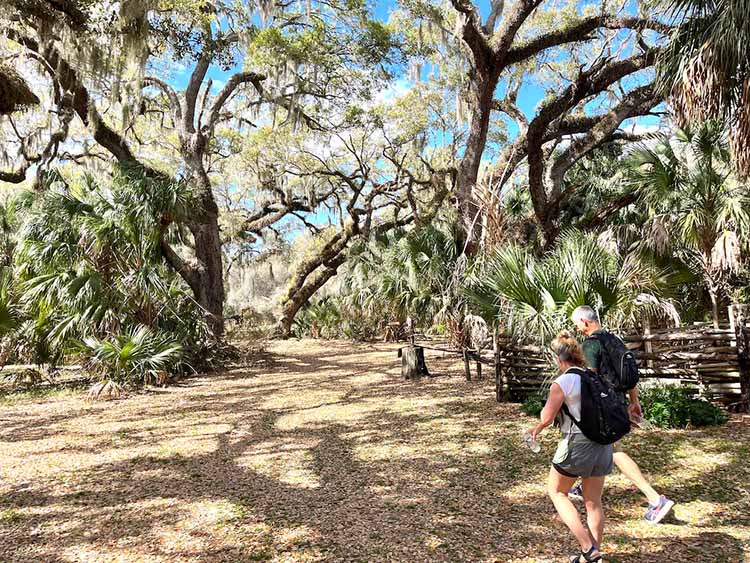
| Two visitors to the 1876 cow camp head back to the 21st century on a path shaded by towering live oak trees. Image by Tom Adkinson |
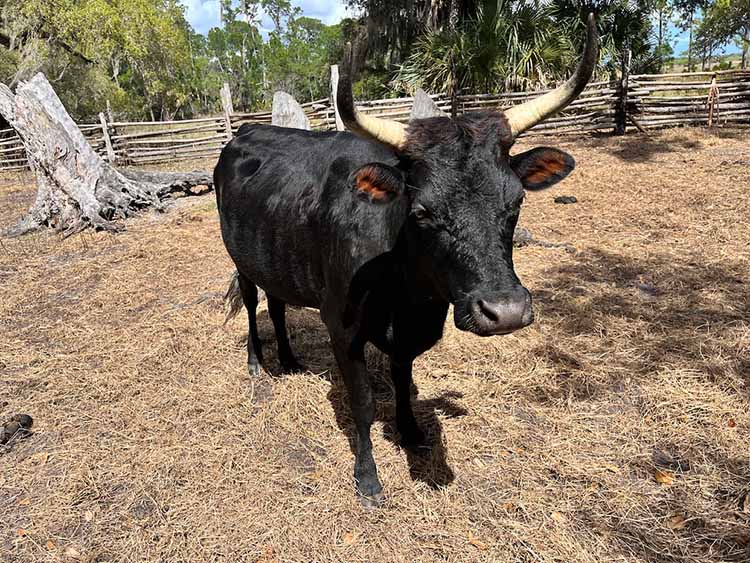
The Spaniards brought Andalusian cattle and horses, some of which eventually roamed free and adapted to the environment. Centuries later, their descendants are specific breeds known as cracker cows and cracker ponies. The cracker cows learned to forage in the scrub brush, heat, and high humidity. They were wiry and tough, but they still had meat on their bones, and that became important in the 1800s after Florida became part of the United States.
 |
|---|
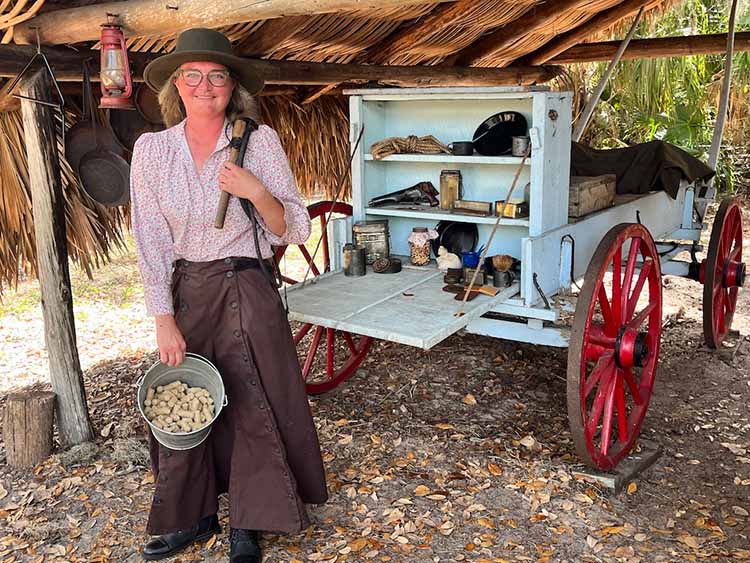
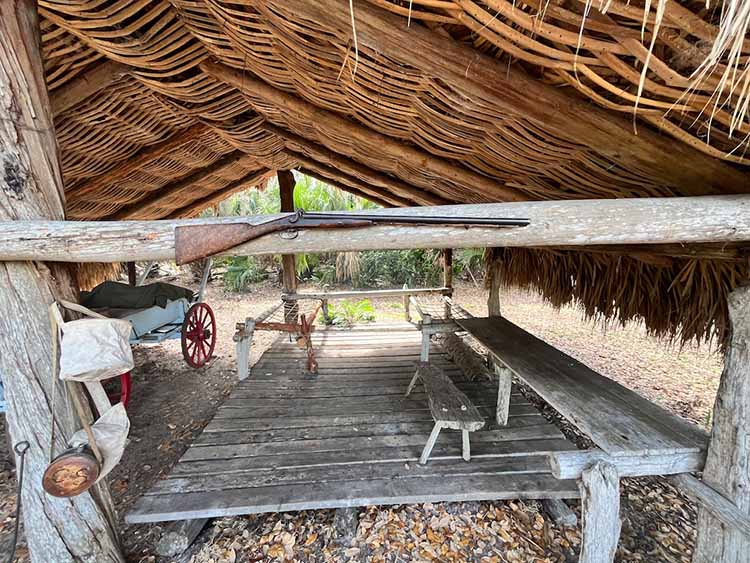
| The few comforts of home for cow-chasing crackers are displayed on a wagon underneath the cow camp’s thatch-roof shelter. Image by Tom Adkinson |
Jacob Summerlin got wealthy hunting cows in the Kissimmee and Peace river areas. The wealth came from hiring cow hunters – not cowboys – to scour the countryside for free-roaming cattle and drive them to market. Wrangling the cows was tough work. The terrain was such that the cow hunters couldn’t lasso the animals. Instead, they cracked whips (hence, the term of a “cracker”) and ran leopard curs – tough, aggressive hounds – to flush the cows from the undergrowth.
 |
|---|
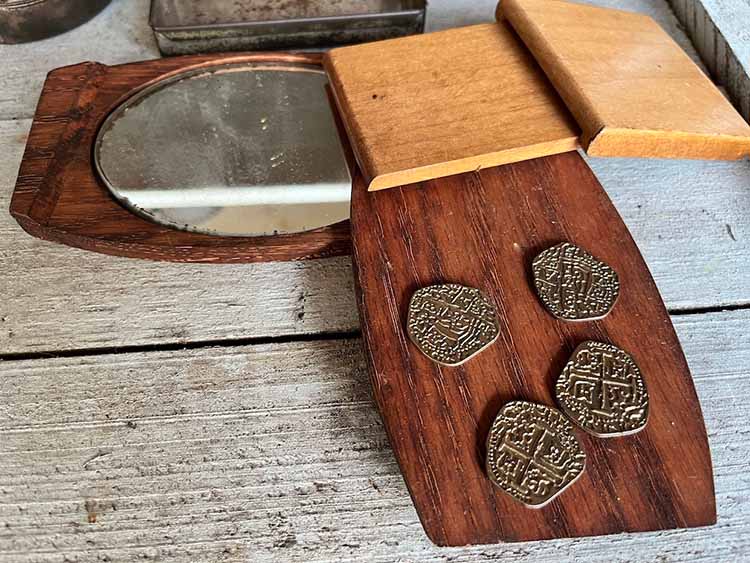
| These pretend gold doubloons represent the real coins Cubans used to pay for Florida crackers’ cattle in the 1800s. Image by Tom Adkinson |
 |
|---|
| Cracker cattle, recognized as a Florida species, were wiry and elusive critters that cow catchers and cur dogs had to flush from thick underbrush. Image by Tom Adkinson |
The crackers could be on the hunt for weeks at a time, staying at simple camps. These cow camps, often in sheltering hammocks of towering live oak trees, had a basic shelter, a campfire and a couple of pens to hold captured cows. Cow camps were roughly a day’s ride apart.
After the Civil War, Summerlin – known as the “Cracker King of Florida” – built a wharf between today’s Cape Coral and Naples so his cracker cows could be shipped to Cuba. According to state park information, the Cubans paid for Summerlin’s beef on the hoof with gold doubloons.
 |
|---|
| Two rope beds on a platform a few inches off the sandy soil passed for comfortable accommodations at cow camps. Image by Tom Adkinson |
The state park’s cow camp is a representation of one from 1876. To get there, you leave your car and the 21st century behind and walk an easy trail through live oaks, slash pines and sable palms to reach an opening with a thatch-roofed shelter, cracker cows in wooden pens and a park ranger dressed as a working cracker. The cracker/ranger is there to explain the challenging work of hunting cracker cows as well as talk about the surrounding environment, which is habitat for bald eagles, sandhill cranes, wild turkeys and other wildlife.
Back in the 21st century, the park has 13 miles of hiking trails, 6 miles of equestrian trails, and the 10-mile Buster Island Paddling Trail for canoes and kayaks, plus access to lakes Kissimmee, Rosalie, and Tiger for pursuing bass, crappie, bluegill, and catfish. The cow camp area is open all year; the rangers’ interpretive programs are Saturdays and holidays from October through April.
Trip-planning resources: FloridaStateParks.org, VisitCentralFlorida.org
(Travel writer Tom Adkinson’s book, 100 Things To Do in Nashville Before You Die, is available at Amazon.com.