By Tom Adkinson
July 24, 2026
 |
|---|
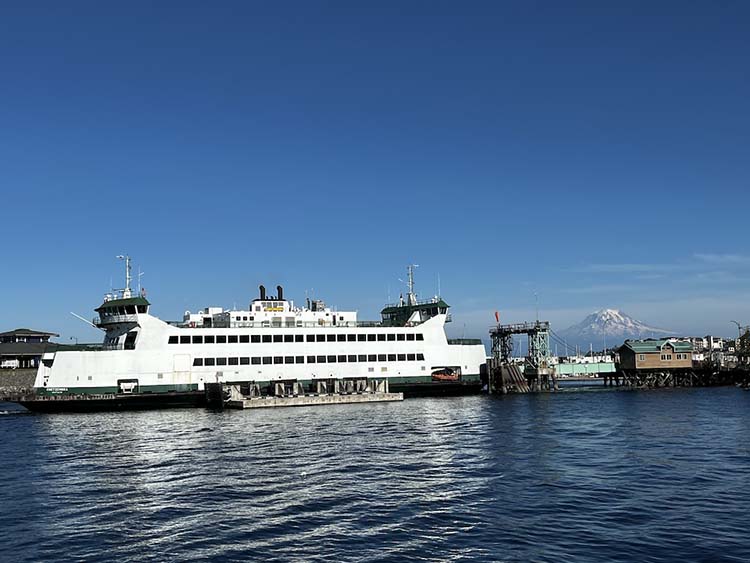
Ferries offer memorable views of American landmarks stretching from the Statue of Liberty in New York Harbor to Mount Rainier rising to the sky above Puget Sound in the Pacific Northwest. For the most part, ferries are utilitarian transportation – the necessary means to get from Point A to Point B when that travel link otherwise would be impossible or overly long and convoluted. You need only to look at a map of Puget Sound to understand the necessity of an extensive ferry system in a region where land and water intertwine with great complexity.
The Bureau of Transportation Statistics (yes, there is such an entity) reports that ferries move people, vehicles, and freight in 36 states. The national ferry fleet has approximately 670 vessels that service more than 900 route segments. Some carry only a handful of vehicles, while others fill their holds and decks with hundreds of cars, buses and trucks. They are necessities for most people and photo-producing novelties for others. The ferry in the first photo here makes a 15-minute transit between Tacoma, Washington, and Vashon Island. Ferry service is the only way for the island’s approximately 10,000 residents to reach the mainland.
| A nautical frame for Lady Liberty |
|---|
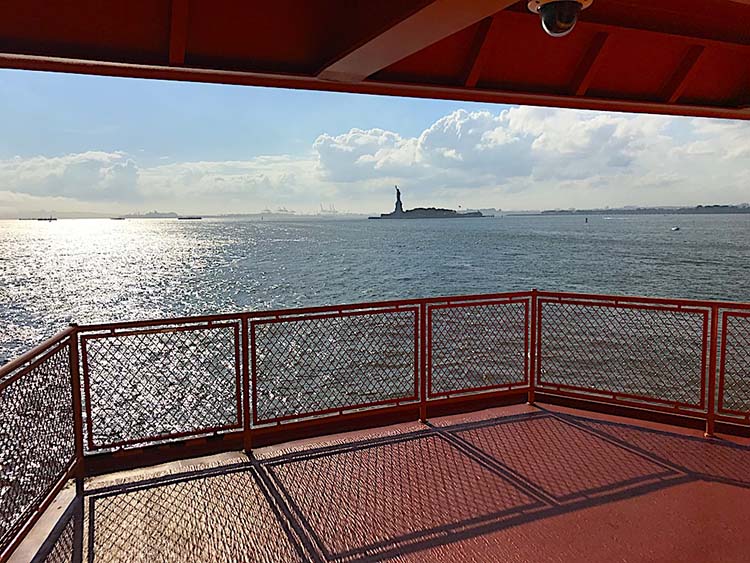 |
A railing and an upper deck of the Staten Island ferry frame the Statue of Liberty in New York Harbor. A New York ferry system of 10 vessels carries almost 22 million people a year between Staten Island and Manhattan. That’s 70,000 people a day. Image by Tom Adkinson
Heading for Manhattan |
|---|
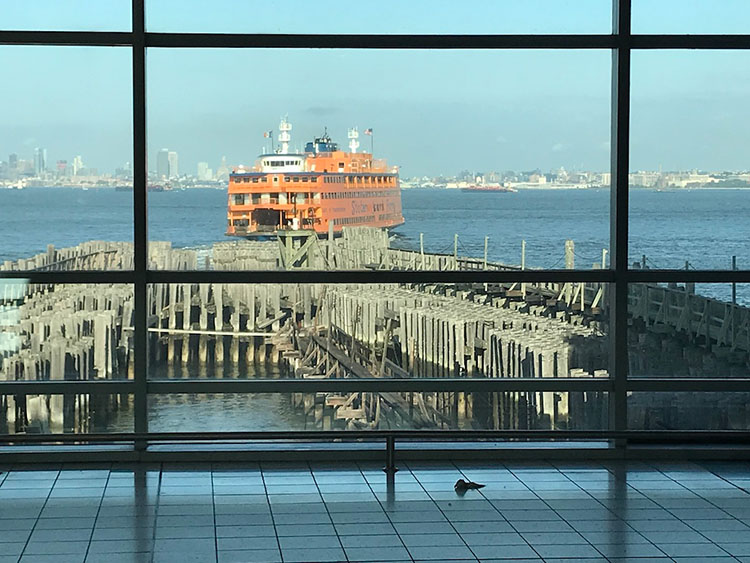 |
A distinctive orange Staten Island Ferry pulls out from the St. George terminal on Staten Island for a quick trip to lower Manhattan. The trip is one of the biggest bargains in New York – it’s free. Free wi-fi is available, but tourists usually spend their time watching the Manhattan skyline and the Statue of Liberty while aboard. Image by Tom Adkinson
| Humble by comparison |
|---|
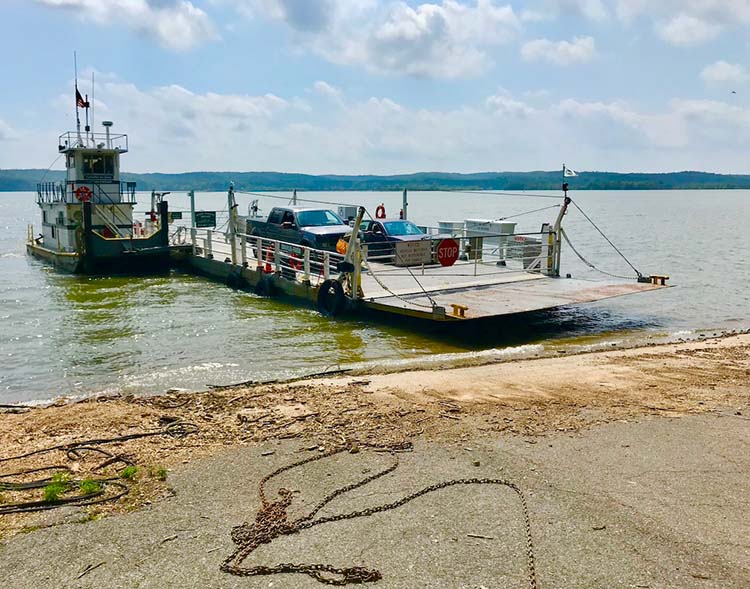 |
Compared to the massive ferries in New York and Puget Sound, the humble Houston-Benton Ferry in West Tennessee seems mighty small. However, it provides a link across Kentucky Lake (actually the dammed-up Tennessee River) that otherwise would require a 50-mile drive. It can carry only eight vehicles. The 15-minute crossing costs only $1, and entertainment often comes from sighting bald eagles in flight. Image by Tom Adkinson
| Pondering the history of Virginia’s James River |
|---|
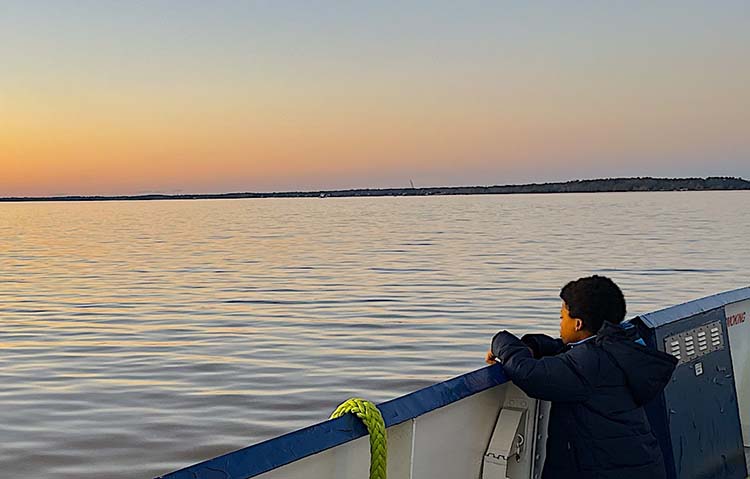 |
A young traveler, freed from the confines of the family car, gets to admire the James River in southern Virginia and perhaps ponder what life was like before colonization began. The ferry fills a gap in Virginia Highway 31 upstream from Newport News. The next river crossing is a bridge 50 miles farther up the James. Image by Tom Adkinson
| Named for a real-life legend |
|---|
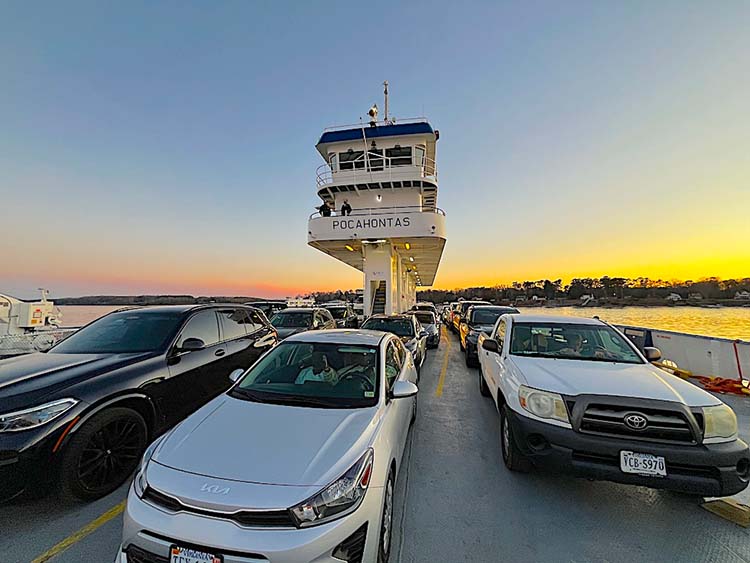 |
Cars fill the deck of the Pocahontas, a ferry crossing the James River in a region of Virginia ripe with history. Native American Pocahontas became a part of American history when she married Capt. John Smith, an Englishman who helped establish the Jamestown colony. The first ferry here was named for Smith, and its first load in 1925 was 16 Model T Fords. The Pocahontas can carry up to 70 vehicles, including buses and some trucks, and is the only 24-hour state-run ferry in Virginia. Image by Tom Adkinson
| Viewing a seagoing neighbor |
|---|
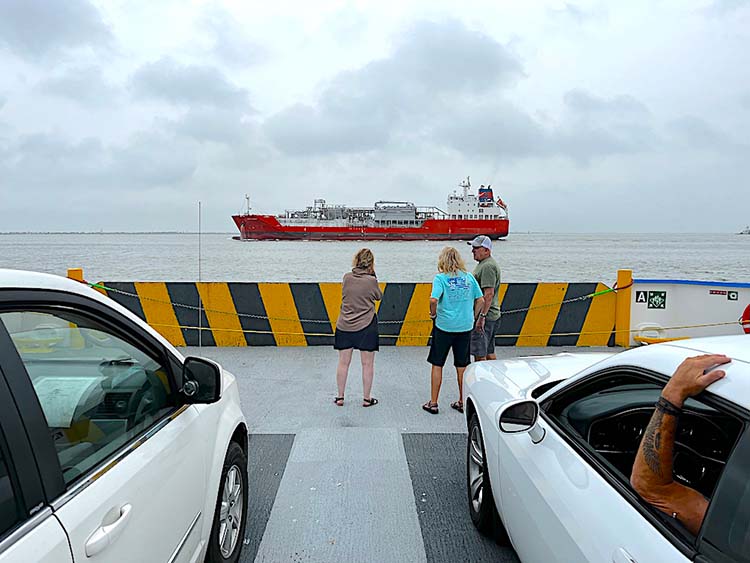 |
Passengers aboard a ferry between Galveston Island in Texas and the Bolivar Peninsula have time to inspect the Happy Avocet, a tanker that flies the flag of Denmark. The 2.7-mile ferry trip is across the mouth of Galveston Bay. The alternate route is inland on I-10, which is longer and lacks ocean scenery. Image by Tom Adkinson
| Ocean below, snow above |
|---|
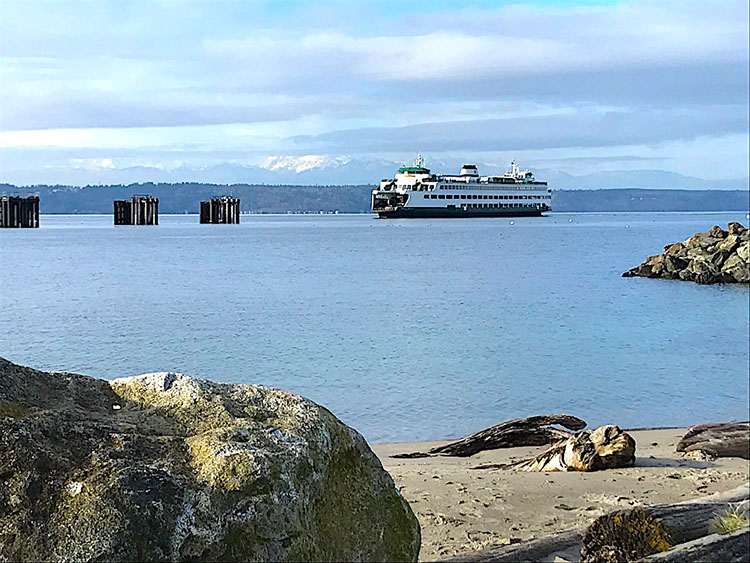 |
Washington’s snow-capped Olympic Mountains provide a backdrop for a ferry that connects Edmonds on the mainland with Kingston on the Olympic Peninsula. The ferry trip is 7.9 miles, while the road route is 104 miles through the traffic of Seattle-Tacoma. In addition to the mountains, there is the prospect of seeing orcas while on a ferry crossing. Image by Tom Adkinson
Trip-planning resources: WashingtonFerries, TexasFerries, and StatenIslandFerry
(Travel writer Tom Adkinson’s book, 100 Things To Do in Nashville Before You Die, is available on Amazon.com.)