By Michael Williams
June 10, 2026
 |
 |
|---|---|
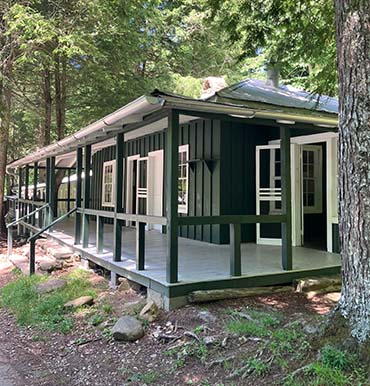
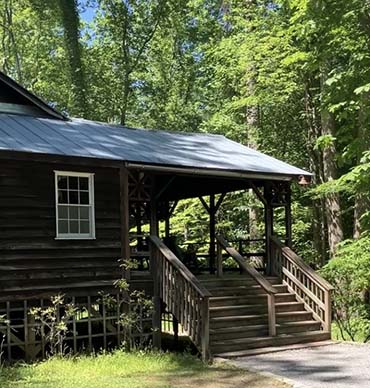
| This is one of 19 buildings that still stand in Daisy Town. More than 80 houses once stood in the ghost town. | A visitor sits in a century-old rocking chair of the restored Appalachian Club, which now serves as an event center for families. |
Anyone with an interest in haunted history or just history in general would be intrigued to visit Daisy Town, nestled in the Elmont Area of Great Smoky Mountains National Park. The tiny community’s origins date back to the early 1900s when the Little River Lumber Company began logging the area. Eventually, a train depot was built. The train ran from Knoxville to Elkmont, then to North Carolina.
In the early 1900s, the Appalachian Club was chartered by a group of prominent businessmen, primarily from Knoxville, including Col. W.B. Townsend, the owner of the lumber company, and for whom the town of Townsend is named. The club was intended as a retreat for the wealthy and elite as a hunting and fishing camp. Soon afterwards, other Knoxville families leased land in the area and built vacation homes. This would soon be named Daisy Town. By 1935, 80 colorful cabins dotted the area, transforming the mountain enclave into a lively social hub. Logging ceased in the 1920s, and the railroad was removed in 1925, as the lucrative timber industry became unprofitable. But this did nothing to dissuade visitors and families from driving to the area.
 |
|---|
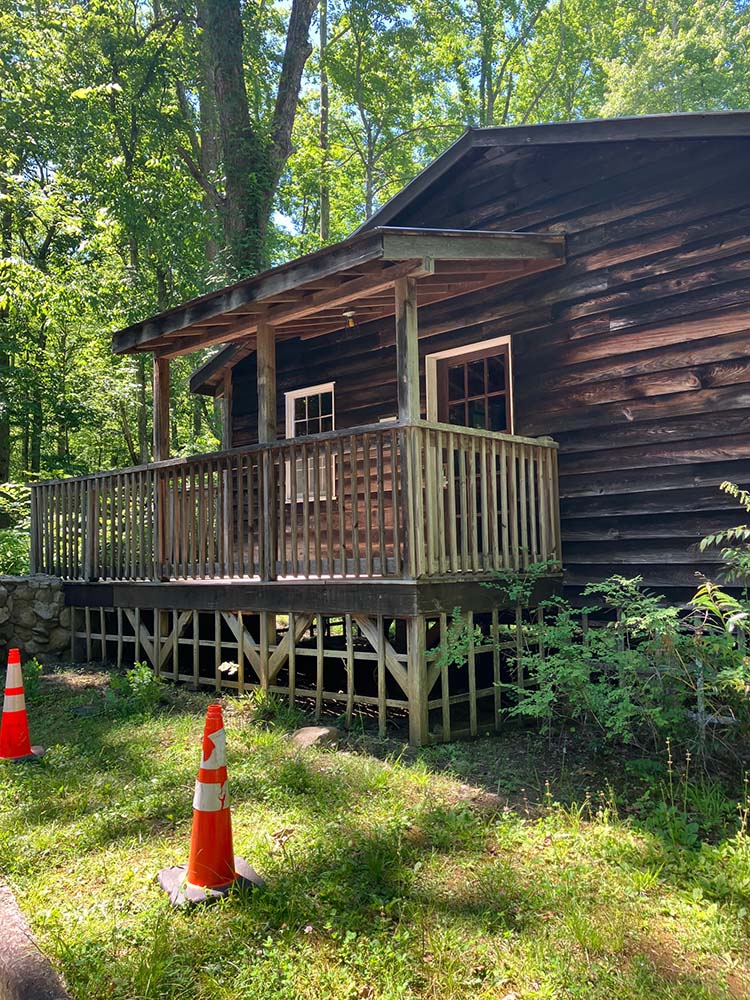
| The Appalachian Club once served as a community gathering spot where fine dining was served. |
Soon, Daisy Town became a popular destination. Families would travel to their cabins, some packing trunks filled with clothes and prepared to stay throughout the summer, where they could enjoy the many creeks and rivers that provided an ample number of swimming areas, hiking trails, and dense forests that sated the imaginations of young visitors. Many men would bring their families to the area and stay over the weekend, then they would return on a three-hour train ride to Knoxville on Sunday night to work through the week and return to their families on Friday.
Many cabin owners would stay from Memorial Day to Labor Day. Some families brought servants with them. Usually, they were Black women who developed their own social life in the mountains. Often, they stayed in a separate house behind the main cabin.
The Appalachian Club established a resort that offered butler service, fine, formal dining, and a popular area where the wealthy congregated and socialized. The resort area had a hotel with its own swimming pool and a clubhouse where residents could have parties and social gatherings.
In the 1930s, Colonel Townsend decided to sell 76,000 acres of his timberland to the federal government. This was combined with other vast land purchases by the United States Government, and a national park was born. On June 15, 1934, Congress established the Great Smoky Mountains National Park.
 |
|---|
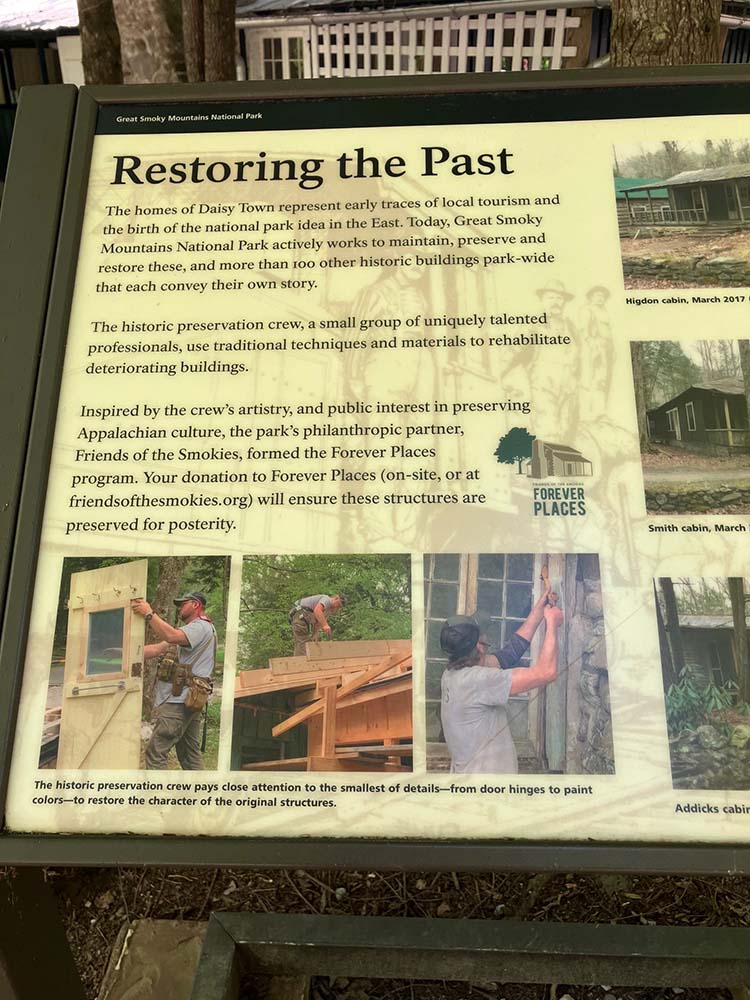
| One of the interpretation boards explains the restoration of the current dwellings that comprise Daisy Town. |
Numerous families that had lived in the park sold their land to the government and left their homes. The next time they returned, they would be visitors, not residents. As for the people who had leased homes in Daisy Town, they sold their leased property to the government with the stipulation that they be allowed to continue staying until they died, at which time their leases would be terminated and their property ceded to the government. As the years passed, Daisy Town fell into disrepair, and one by one, as the residents died, the land was absorbed into the national park. The last occupant left Daisy Town in 1992. Since then, the town has been abandoned.
The National Park Service began the process of restoring the area for historical preservation. Most of the 80 homes were demolished due to the dilapidated state. The hotel was on the verge of collapsing and was finally torn down. Nineteen cabins were restored. The electrical service was removed from all but one, and the bathrooms were sealed off, and water was cut off to the cabins.
The cabins now appear in pristine condition. They are all more than 100 years old. Visitors can now walk or drive up a paved road where the railroad once lay. Tourists can walk through the many cabins and speculate on how the people here lived, worked, and played. If the walls of these many cabins could speak, they would tell stories of the youthful innocence of children gleefully at play and frolicking in the creeks or running along the trails, tales of young love and marriage proposals, honeymooners starting their own families, hunters displaying their prized trophies, or fishermen telling tales.
The Appalachian Clubhouse has been restored, and visitors can sit in rocking chairs where vacationers sat a century ago. The outside is adorned with storyboards displaying photos taken as early as 1910 of the bygone eras, featuring hundreds of visitors, now long gone, in period attire, enjoying a summer afternoon in the clubhouse.
One can only wonder if Col. Townsend fully appreciated what happened in this area that forever changed the Volunteer State and created a billion-dollar industry that has benefited legions of people and forever changed life in the Smokies.
Daisy Town was the birthplace of modern tourism in the Great Smoky Mountains National Park. Today, more than nine million visitors visit the national park annually. And it all started in this quiet, tight-knit, little community known as Daisy Town.