By Ian Rutter
March 29, 2026
 |
|---|
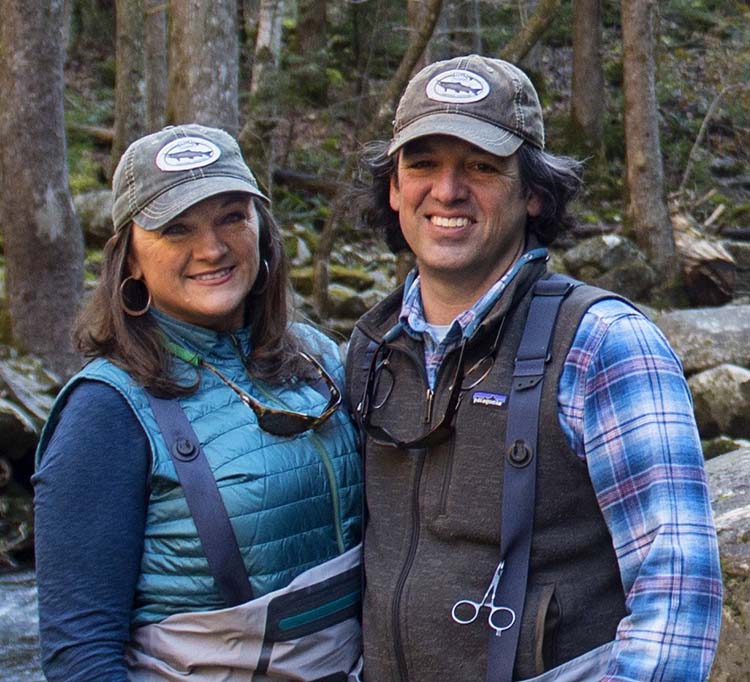
| Ian and Charity Rutter |
On a busy spring weekend in Tennessee, as families load kayaks, string up fly rods or set up tents in the Great Smoky Mountains National Park, most visitors aren’t thinking about aging road conditions and wastewater systems. Instead, they’re thinking about a quiet hike to a waterfall, beautiful views from a mountaintop, or catching fish with their children.
As a business owner in Townsend, a gateway community to the park, my livelihood depends on visitors drawn to Tennessee’s public lands. When our parks and public lands are well maintained, local businesses like mine thrive, and Tennesseans benefit from a growing tourism economy.
But when park roads close unexpectedly or deteriorating infrastructure limits visitor access, our phones start ringing – and not in a good way. Trips to the mountains are postponed and seasonal employees lose work. All across Tennessee, from the Appalachian Trail to the Shiloh battlefield, the condition of our public lands directly affects small businesses like mine.
That’s why the bipartisan Great American Outdoors Act of 2020 was so important. It created the National Parks and Public Lands Legacy Restoration Fund (LRF), which provided dedicated funding for long-overdue maintenance within our federal lands. The fund expired last year, and Congress is considering the America the Beautiful Act to extend funding for eight years.
Here in Tennessee that investment has delivered real results.
More than 12.5 million visitors enjoyed national park sites in our state in 2024. Those visitors spent $1.7 billion in gateway communities, supporting over 17,000 jobs and contributing $2.5 billion to Tennessee’s economy.
Since 2020, Tennessee has received nearly $57.8 million in LRF funding for critical projects. Improvements at the Great Smoky Mountains National Park and along the Natchez Trace Parkway have addressed road systems and water infrastructure that millions of visitors rely on each year. The Foothills Parkway rehabilitation project alone is estimated to support around 400 jobs, contributing more than $85 million to the economy and reducing over $25 million in deferred maintenance costs for the park.
But the job isn’t done.
Public lands in Tennessee, including national parks, forests, and wildlife refuges, still face more than $460 million in deferred maintenance. Although the LRF expired last year, the Senate can pass the America the Beautiful Act to extend it for eight more years while strengthening project reporting and transparency. This would allow states like Tennessee to continue addressing critical repairs before problems grow more expensive and disruptive.
Anyone who has ever had a car or a house knows that sometimes they must spend money to save money. A few shingles are cheaper to repair than major structural damage from an untended leaky roof. Dilapidated bridges become safety hazards. Equipment and HVAC systems that could have been repaired now need to be replaced. When property owners ignore upkeep, instead of saving money, they’re only postponing — and increasing — maintenance costs. If my small business can plan for and handle routine maintenance, it’s only reasonable to expect that Congress should enable federal land agencies to do the same to reduce overall costs while improving visitor experiences.
The America the Beautiful Act would help give these agencies the tools they need to address deferred maintenance issues. Tennessee's lawmakers should recognize that national parks and public lands are solid economic anchors that support small businesses and workers and strengthen communities across the entire state.
Without continued LRF funding, businesses like mine will struggle to reliably predict tourism activity, and this directly affects how we operate. When roads are safe and public facilities are maintained well, visitors return. When infrastructure falls behind, tourism-dependent businesses like mine and those of my neighbors feel it first.
As Congress considers the America the Beautiful Act, I encourage members on both sides of the aisle to support extending the Legacy Restoration Fund. Supporting the America the Beautiful Act means supporting small businesses and rural communities.
When visitors pull into a park entrance this summer, they may never notice the restored pavement beneath their tires. But Tennessee’s businesses will.
Keeping our national parks maintained isn’t just good stewardship. It’s good business for Tennessee.
Ian Rutter owns and operates R&R Fly Fishing in Townsend, a gateway community to Great Smoky Mountains National Park, and works daily with visitors and tourists who drive the local economy. His experience is simple: when park infrastructure deteriorates or access is disrupted, small businesses lose customers and communities feel the impact.