Trillium Secures $13M for First Bio-based Acrylonitrile Plant
By Knoxville Daily Sun Staff
May 5, 2026, 2:55 pm
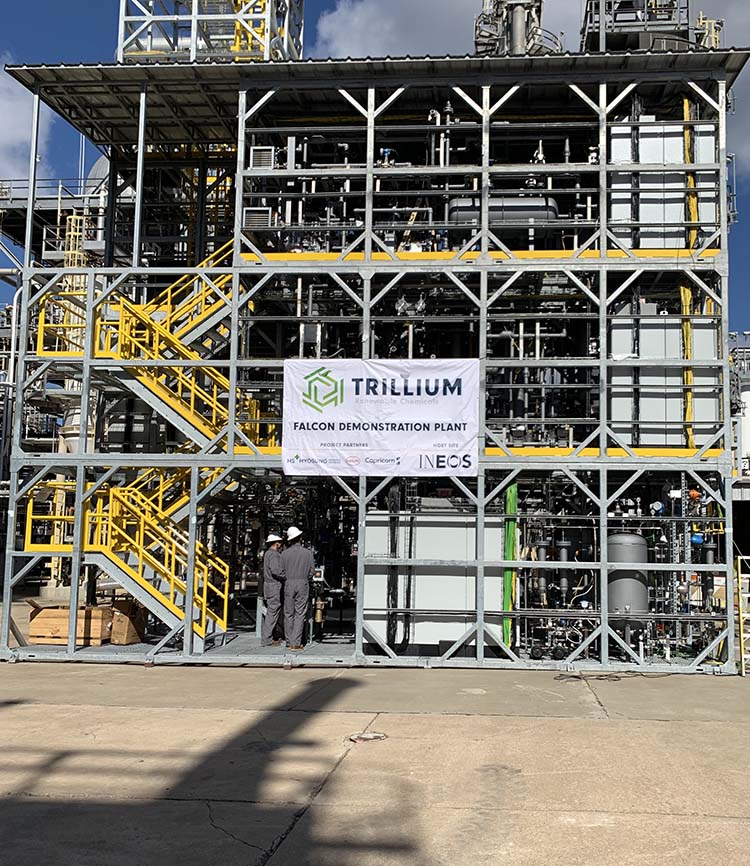 Trillium's Project Falcon demonstration plant at INEOS Nitriles’ Green Lake facility in Port Lavaca, Texas; image submitted |
KNOXVILLE - Trillium Renewable Chemicals, a company that makes chemicals from renewable sources, announced it has raised $13 million in a Series B funding round. The round was led by HS Hyosung Advanced Materials, with support from Capricorn Partners. This new funding adds to their earlier $10.6 million Series A round and a $2.5 million award from the U.S. Department of Energy.
After years of successful testing of their technology that converts glycerol into acrylonitrile, Trillium chose INEOS Nitriles’ Green Lake facility to build the world’s first demonstration plant for making 100% bio-based acrylonitrile. The plant, called Project Falcon, is now fully constructed. It is the first large-scale site using Trillium’s technology. Commissioning of the plant will begin in the second quarter of 2026, with product shipments starting later that year.
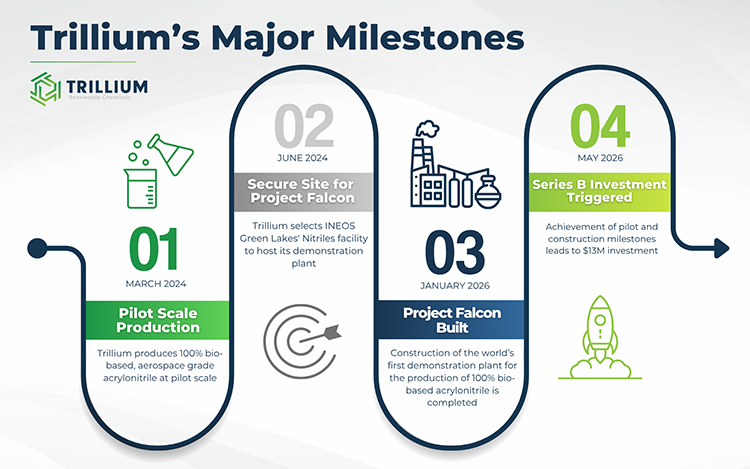
The new funds support the design and building of Falcon (now complete), its operation, continued pilot innovation, and engineering design for Trillium’s first commercial plant.
Young-Joon Lee, Senior Vice President at HS Hyosung Advanced Materials, said, “Finishing Falcon shows that Trillium’s technology works on an industrial scale. Getting sustainable acrylonitrile is very important for the industry. Project Falcon will prove this drop-in bio-based product can be made at scale.”
Capricorn Partners’ Wouter Van de Putte added, “Completing Falcon moves Trillium closer to commercial manufacturing. They have shown strong technical ability and execution at large scale.”
Corey Tyree, CEO of Trillium, said, “Our pilot tests proved the chemistry, and Falcon proves we can make it at scale. We are moving from technical proof to commercial proof. This funding lets us show bio-based acrylonitrile meets industrial standards at meaningful volumes.”
After Falcon is running, Trillium will focus on engineering and developing its first full commercial plant. The company is already working with partners and customers to prepare for the commercial launch.
Currently, global acrylonitrile production is over 6 million metric tons yearly and mostly comes from fossil fuels. Trillium’s process offers a plant-based alternative that fits into existing supply chains without changes. Acrylonitrile is used to make many products like carbon fiber, plastics, textiles, synthetic rubber, and more. These materials serve important industries such as aerospace, automotive, and specialty polymers.
For more information on Trillium, please visit www.trilliumchemicals.com.