So . . . What happened in Puerto Vallarta After One Day of Mayhem?
By Tom Adkinson
Mar 5, 2026
Editor's Note: Knoxville Daily Sun's travel writer Tom Adkinson filed this reflection on the recent disturbance in Puerto Vallarta, Mexico
 |
|---|
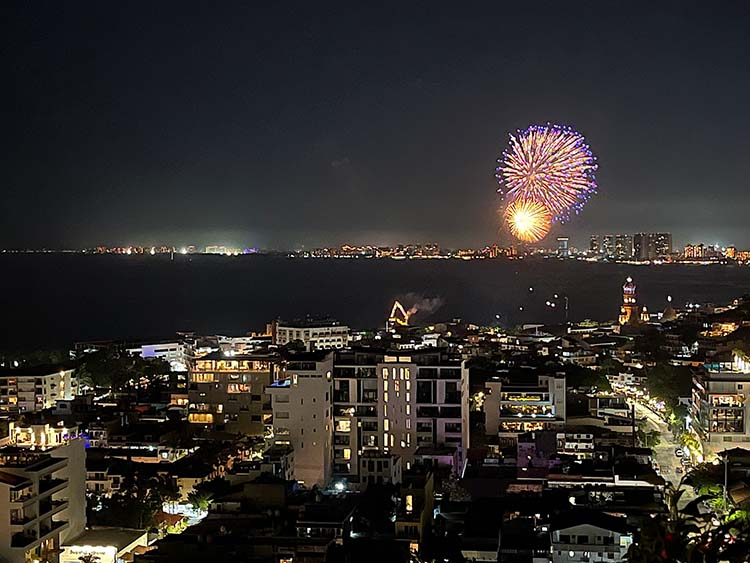
| A faux pirate ship sends colorful fireworks over the Puerto Vallarta waterfront every evening. Image by Tom Adkinson |
PUERTO VILLARTA, Mexico – “Never a Bad Day.” That promotional slogan for the Pacific Coast resort city of Puerto Vallarta was true until Feb. 22, 2026. That day was a quiet Sunday until members of a Mexican drug cartel shut the city down in dramatic fashion.
Even in a city of nearly 600,000, burning cars and buses in strategic intersections and fires set mostly in corporately owned convenience stores can blacken the sky with smoke and generate scary video. The rampage conspicuously spared locally owned structures. What the cartel members didn’t do was just as significant, but not visual. They didn’t harm anyone – no locals, no tourists, no expats who had relocated to paradise.
 |
|---|
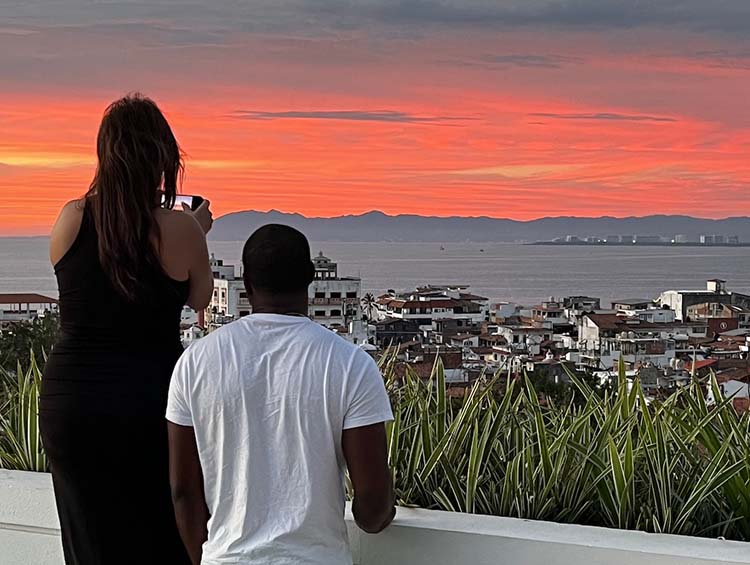
| A tourist couple enjoys one of the spectacular sunsets that are one of Puerto Vallarta’s most famous calling cards. Image by Tom Adkinson |
They were reacting to the death of their leader, Nemesio Oseguera Cervantes, known as “El Mencho,” after a Mexican government raid elsewhere in Mexico. Images of their violence in Puerto Vallarta, Guadalajara, and other locations immediately hit the media, traditional and social alike.
I viewed the coverage with intense curiosity because I had left Puerto Vallarta just a few days earlier after spending most of January there to relax in a city known for its welcoming vibe, excellent seafood, and spectacular sunsets. It was distressing to see plumes of smoke rise in areas of town I knew well.
What happened after that Sunday’s violence should become a case study of media coverage of a dramatic event, a city’s reaction to the event, and visitors’ perceptions of the city, both short-term and long-term. The same could be said when natural disasters such as hurricanes, earthquakes, and wildfires disrupt normal life in areas popular with tourists.
Everyone in Puerto Vallarta hunkered down that Sunday as soldiers and police appeared on the streets, overhead in helicopters, and on patrol boats in Banderas Bay. Airlines cancelled flights. Cruise ships changed their itineraries. Everyone was in suspense. Hoteliers cared for their guests. Condo renters were glad they had stocked their refrigerators.
 |
|---|
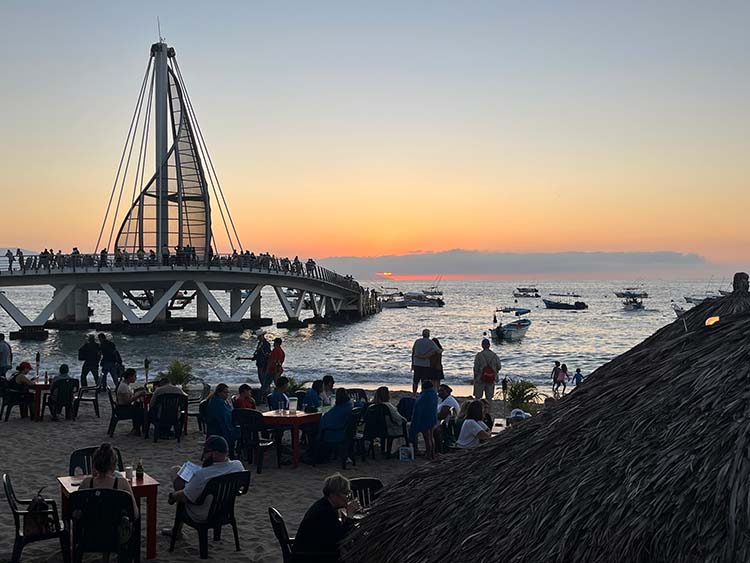
| Los Muertos Pier and its casual beach setting are landmarks in one of Puerto Vallarta’s most popular districts. Image by Tom Adkinson |
People began venturing out cautiously on Monday. Restaurants and food stores began to reopen. By Tuesday, most of the burned-out vehicles had been removed. By Wednesday, the restaurants and beaches were active again, and the faux pirate ship resumed its evening fireworks show. Flights resumed at the international airport.
“Everything went back to normal very quickly,” said Barbara Ramsay Orr, a Canadian travel writer who winters in Puerto Vallarta, while noting changes that happened during the next few weeks.
“It’s pleasantly quiet, but it’s eerie. I’d say there are half as many visitors here now than normal. This is high season, but it doesn’t feel that way. It’s very sad,” she said.
Orr commented on the lingering hurt by citing an Uber driver whose daily income was slashed. He normally earned about 2,000 pesos a day (roughly $115). That’s down to 800 pesos (roughly $45).
Yves Gentil, an American who lives much of the year in Puerto Vallarta, agreed.
“It is very quiet. Many people left. Others cancelled their plans to visit. It just feels very strange. The expats and the tourists feel that all is well, but I can tell that the locals are anxious,” Gentil said.
 |
|---|
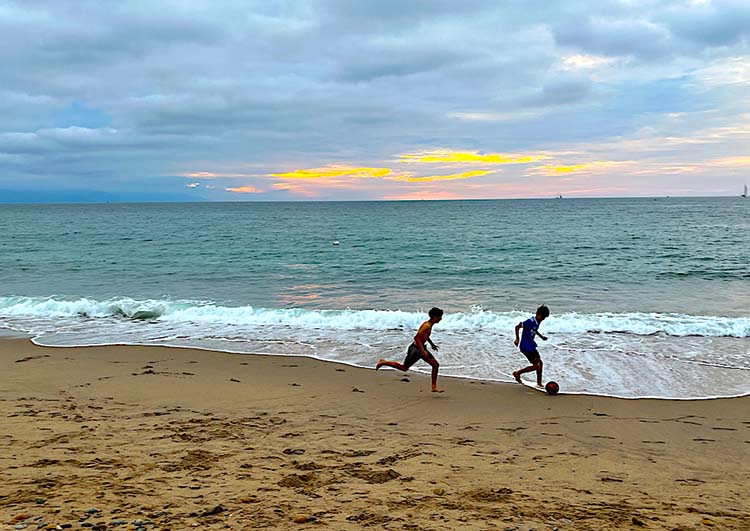
| Two boys enjoy soccer in the waves of a quiet beach just outside an open-air restaurant in Puerto Vallarta’s 5 de Diciembre neighborhood. Image by Tom Adkinson |
Resident social media commentators almost immediately began campaigning to explain that the violence of Feb. 22 was unprecedented and should not shape people’s perceptions of Puerto Vallarta.
The author of the “My Puerto Vallarta Daily” Facebook page has preached parallel messages. First, pay attention when something bad happens, while avoiding sensationalism. Second, do your own research later to see how the destination is faring.
“What happened here was serious and not typical. Yes, hearing explosions and seeing burned vehicles creates anxiety. It felt that, too. But the situation was contained quickly. If you’re thinking about coming, don’t let fear decide for you,” he wrote.
By extension, the same is true when a hurricane hits Key West, an earthquake rattles San Francisco, or a wildfire rips through part of Colorado.
As for Puerto Vallarta, I’m just like travel writer Orr. We’ve already booked for next winter.
Trip-planning resources: VisitPuertoVallarta.com
Travel writer Tom Adkinson’s book, 100 Things To Do in Nashville Before You Die, is available at Amazon.com.