By Jeaneane Payne
Jan 22, 2026, 1:31 pm
Officials overseeing a substantial $42 million allocated for the restoration of natural resources impacted by the Oak Ridge Reservation (ORR) have announced the approval of seven key projects. This announcement accompanies the release of the inaugural restoration plan, which outlines the selected initiatives aimed at addressing the ecological damage caused by contamination resulting from historical activities at the site.
The seven projects are:
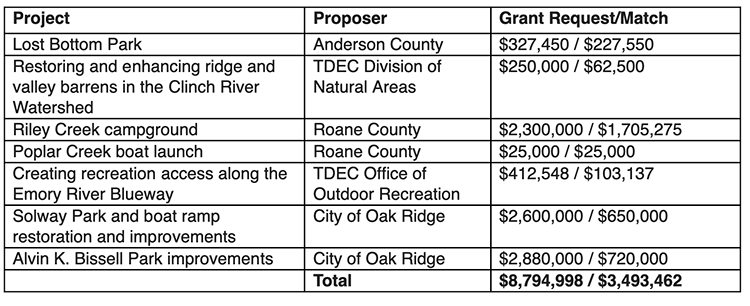
The ORR, a pivotal location during the Manhattan Project in the early 1940s, has experienced significant environmental degradation due to hazardous materials released over the decades. The Trustees involved in this restoration program include notable organizations such as the Tennessee Department of Environment and Conservation (TDEC), the Tennessee Valley Authority (TVA), the United States Department of Energy (DOE), and the United States Department of the Interior, represented by the United States Fish and Wildlife Service (USFWS).
The funding provided by the DOE is managed through an account overseen by the state of Tennessee, emphasizing a collaborative approach to restoration. The Trustees utilized a structured process for soliciting, evaluating, and selecting project proposals under the Natural Resources Damage Assessment and Restoration (NRDAR) framework. The overarching aim of these selected projects is to restore and rehabilitate natural resources to compensate for ecological losses attributable to contamination at the ORR.
Key Project Themes and Goals
The restoration plan encompasses a diverse array of projects that not only aim to enhance the ecological integrity of the ORR but also promote recreational opportunities for the community. Funded initiatives may include:
• Habitat Restoration: Projects that involve clearing abandoned areas for the reintroduction of native vegetation, removal of invasive species, and overall land conservation efforts.
• Infrastructure Improvements: Installation of permeable pavements in streets and parking lots to optimize rainwater infiltration, thereby improving local hydrology and mitigating flooding.
• Public Access Enhancements: Construction and improvement of amenities such as boat launches, fishing piers, public hiking and biking trails, and wildlife viewing areas, thus facilitating greater public engagement with natural spaces.
• Education and Awareness Initiatives: Programs designed to increase awareness and understanding of local ecosystems and the importance of their restoration.
Context and Significance
The ORR spans approximately 37,000 acres across Anderson and Roane counties, bordered by the City of Oak Ridge to the north and east, and the Clinch River to the south and west. Designated a Superfund Site by the U.S. Environmental Protection Agency (EPA) in 1989, nearly 15 percent of ORR remains contaminated with hazardous and radioactive materials. Remediation efforts are ongoing, with the Tennessee Division of Remediation's Oak Ridge office supervising all environmental protection and remedial actions in the area.
This restoration initiative represents a critical step toward not only healing the environment but also revitalizing the community's connection to its natural resources. By supporting sustainable development and ecosystem restoration, the funded projects will contribute to the holistic recovery of the ORR while fostering recreational opportunities that benefit both residents and visitors.
You may view the TDEC Division of Remediation website for more information about the Oak Ridge Reservation.
Details of the seven projects are:
Lost Bottom Park – The Lost Bottom Park project is a recreation construction project with additional ecological investments located on approximately 5 acres and 1,100 feet of shoreline on the Clinch River in Anderson County. It is located at River Mile 51.5 on the proposed Pellissippi Blueway, which will provide over 50 miles of flatwater paddling, wildlife viewing, and fishing opportunity.
The project will restore and enhance habitat, reduce erosion and runoff, and support groundwater recharge protection. The project will improve the existing boat launch ramp, construct an ADA compliant boardwalk and fishing pier, construct a kayak launch, provide additional parking and improve access opportunities, remove invasive plant species, and restore native vegetation.
Restoring and enhancing ridge and valley barrens in the Clinch River Watershed –
Restoring and enhancing ridge and valley barrens in the Clinch River
Watershed is a habitat enhancement and restoration project located at three State Natural Areas in Roane and Anderson Counties: Crowder Cemetery Barrens (15 acres), Campbell Bend Barrens (35 acres), and Oak Ridge Barrens (5.76 acres). The project focuses on preserving and enhancing natural resources to improve their ecological function resilience, benefitting terrestrial species that thrive in open habitats.
The project will provide broad-scale active management to expand the small pockets of existing habitat currently harboring rare plants as well as several uncommon plants. A small trail system will be installed at the Crowder Cemetery and Campbell Bend Barrens, and the current trail and information kiosk at Oak Ridge Barrens will be updated and enhanced to connect the community to the resources and raise awareness of species and habitats unique to the region.
Riley Creek Campground – Riley Creek Campground consists of 81.2 acres and approximately 1,000 feet of shoreline located on Watts Bar Lake in Roane County. The Riley Creek Campground project will enhance and create habitat and improve groundwater and surface water protection.
The project will include planting native vegetation to restore previously disturbed areas to benefit bee, butterfly and bat populations. Additional planting will occur in areas along the shoreline to assist with stormwater runoff and bank stabilization. The project will utilize septic conversion, decommissioning the existing septic tank, installing sewer hook-ups and on-site treatment with a drip irrigation system installed in accordance with the recommendations of a professional wetland scientist.
Poplar Creek boat launch – The Poplar Creek boat launch project is located on Poplar Creek Road in Oliver Springs. The project targets improvement of public access to resources and quality of the public’s recreation experience.
The project will provide a convenient, safe kayak access point for daytime paddle sports activities on historic Poplar Creek. The project will include permeable surface parking, signage and an access structure. The access will connect Poplar Creek to other Roane County access points along the Clinch River.
Creating recreation access along the Emory River Blueway – Creating recreation access along the Emory River Blueway is a public paddling access project on the Emory River with additional habitat restoration and enhancement components.
The three project locations along the Emory River include Reister Access road of Catoosa Wildlife Management Area, City of Oakdale property on Riverview Street, and Confluence of Emory River and Clifty Creek at Clifty Creek State Natural Area. The project includes constructing and enhancing launch points in the three locations, well-connected with an existing access point at Nemo Bridge, creating a continuous paddling corridor trail approximately 12.9 miles in length. This recreation asset will connect the community to water resources and ecosystems in the region and provide leisure opportunities that will improve community well-being. The project will also remove invasive species and restore native plant communities at the Clifty Creek State Natural Area.
Solway Park and boat ramp restoration and improvements – The Solway Park and boat ramp restoration and improvements project is located on the Clinch River at Edgemoor Road in Oak Ridge. The project will enhance recreational access to the waterfront and increase parking area capacity while minimizing environmental impacts and supporting restoration and conservation of wetland and riparian zones.
The project will rehabilitate the existing boat ramp to provide additional usage during low water levels and replace the access ramp and courtesy dock. It will redesign vehicle and pedestrian traffic flow with reconfigured parking to increase capacity using green parking lot techniques, maintenance the accessible fishing pier, and add ADA-compliant infrastructure including accessible parking, new accessible trail, transfer station, and kayak launch. The project will also focus on habitat restoration and enhancement efforts through shoreline stabilization and removal of invasives.
Alvin K. Bissell Park improvements – Alvin K. Bissell Park is on an unnamed tributary of the East Fork of Polar Creek on the Oak Ridge Turnpike in Oak Ridge. The project primarily focuses on restoring stream resources with additional focus on increasing park visitor experience and use. The project will remove 450 linear feet of existing culvert and restore the unnamed tributary to a natural state, improving water quality and enhancing biodiversity. New trail bridges will be installed for crossings over the daylighted stream, and the greenway trail will be rehabilitated and extended using low-impact construction techniques. Invasive plant removal will also assist with preservation of natural habitat.