| |
How to promote community reintegration for formerly incarcerated individuals
By Trent Griffin-Braaf, CEO & Founder – Tech Valley Shuttle and GB Logistics
Published July 25, 2023; 5:02 p.m.
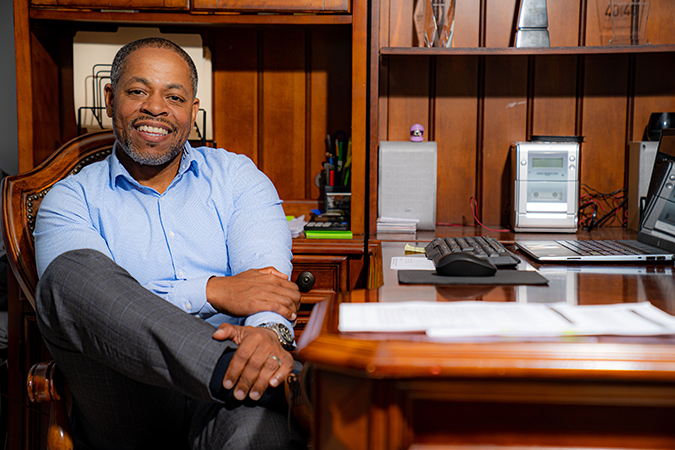
Trent Griffin-Braaf, CEO & Founder of Tech Valley Shuttle and GB Logistics. Image submitted |
Today, almost 2 million people are incarcerated in America, and over 10,000 are released every week, on average. According to the US Department of Justice, two-thirds of those released will be arrested again within only three years.
Judging from this high rate of recidivism, our current prison system doesn’t actually help people correct their lives. Rather, it perpetuates itself by keeping people in the system. The definition of insanity is doing the same thing over and over but expecting different results; yet, the current prison system does just that.
However, it doesn’t have to be this way. I know, because I was once incarcerated myself. Back then, I — like many formerly incarcerated individuals — was viewed as stupid and lazy. Today, I’m one of the largest Black business owners in New York, and people often admire my work ethic and tell me I’m a genius.
Just imagine how many of those two million incarcerated people could have the same potential as me. Picture how much good could be unleashed for society if, instead of committing more crimes and returning to jail, they went on to do amazing things that furthered America.
Returning citizens constitute an asset for our nation’s growth, sustainability, and prosperity. By supporting their reintegration into society, communities can create benefits for themselves while helping underserved populations at the same time.
How communities benefit from facilitating reintegration
The first reason communities should help returning citizens’ reintegration is to reduce crime. When individuals successfully assimilate back into society, they engage in positive pursuits and no longer need to commit crimes to get by. This means improved public safety and healthier, more positive neighborhoods.
Returning citizens also make important economic contributions to their communities. When individuals find gainful employment and thrive in their lives, they pay more in taxes. These public funds can then be funneled into further benefits for the community like improving the school system. The virtuous cycle continues as increased investment in the future of our youth helps the next generation avoid prison.
In addition, supporting reintegration strengthens families within communities. The current system creates broken households and places inmates’ innocent children at increased risk of mental health issues and antisocial behavior. Even those households that aren’t broken find themselves divided because one member of the household is incarcerated. Research from Cornell University and the FWD.us Education Fund has found that nearly 50 percent of all Americans currently have or have had an incarcerated family member. That’s a massive number of people.
When communities support returning citizens, families are strengthened. This not only helps children recover from the disruption of their family, but also reduces their own chances of ending up in prison.
The importance of gainful employment
Perhaps the largest barrier to reintegration that returning citizens face is access to gainful employment. If you aren’t making money, it’s hard to live a life of any kind, much less a satisfying one. Without access to good jobs, individuals sometimes see no choice but to return to crime.
That’s why helping returning citizens skill up and secure stable employment can make an enormous difference for both the individuals and the community. At Tech Valley Shuttle, we have a saying: “One way in, two ways out.” In other words, our goal for every individual who works with us is to add two additional skill sets to their resume by the time they leave us. That’s two more tools they can use to stay out of prison.
Given the importance of gainful employment, employers should consider hiring ex-offenders and establishing systems to support them. Building empowering, supportive cultures in this way makes employers attractive to talent from underserved populations. In addition, returning citizens are great employees because they tend to be appreciative and loyal when organizations give them a chance.
Other strategies to support returning citizens
Communities can help ensure returning citizens’ reintegration in other ways as well. Providing free or low-cost transportation options, for instance, can help them get to and from work, as well as interviews, places of worship, gyms, AA meetings, and healthcare appointments. In this way, communities can help people access the places and activities that will bolster their physical, emotional, and spiritual wellbeing.
In addition, communities can help returning citizens find the right path by offering counseling and mental health services, as well as developing mentorship programs and support groups. Resources like these give people a sense of belonging and combat the feelings of isolation or alienation that can provoke antisocial behavior.
Since returning citizens often face housing discrimination, another productive strategy would be for communities to create transitional housing initiatives and invest in affordable housing options.
A new future
Right now, the current prison system puts people inside a cage for making a mistake and counts them out for the rest of their lives. In the process, people with beautiful minds aren’t given the opportunities they deserve. In counting them out, we also count America out.
But the future doesn’t have to repeat these mistakes. Communities can help reintegrate returning citizens, and in the process, reap great rewards.
— Trent Griffin-Braaf is the CEO & Founder of Tech Valley Shuttle and GB Logistics. He is the largest BIPOC employer in New York State and The Capital Region, and Tech Valley Shuttle is the first Black-owned business to be named one of the best places to work by the Albany Business Review. In 2023 the US Small Business Administration named him as the Upstate New York Small Business Person of the Year. His mission is to combat poverty through transportation solutions and employee empowerment. As a former incarcerated person, he is leading the way for other employers to learn how to become an employer of choice for returning citizens, single parents, and veterans.
Local Resources:
• Connect Ministries
|