When Dinosaurs roamed East Tennessee
By Michael Williams
Published August 21, 2023; 7:53 p.m.
For many years in the sleepy little community known as Gray, Tennessee, the residents of the community went about their day-to-day lives unaware of the prehistoric past of the area they knew as home. Children played in fields and farmers trod the soil, where they planted the crops, oblivious to the rich deposits of dinosaur fossils that lay only a short depth beneath their feet. In May of 2000, the state highway department made a serendipitous discovery that would forever alter the area and permanently link East Tennessee to a long forgotten prehistoric past.
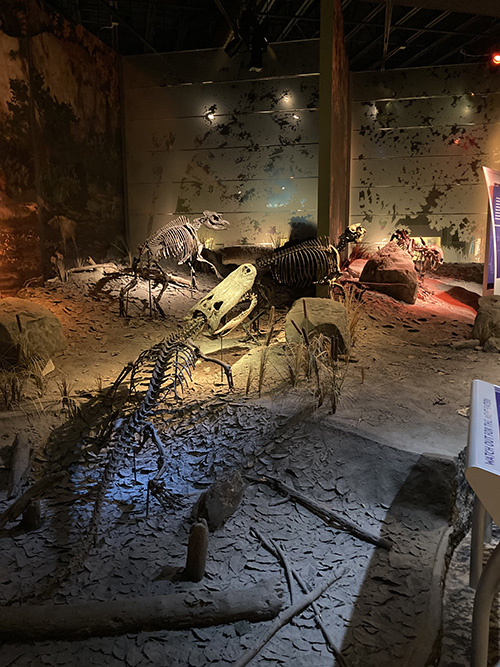
The fossilized remains of a prehistoric alligator and a tapir are two of many fossils uncovered at the Gray Fossil Site in Gray, Tennessee.
|
On that summer’s day, the Tennessee Department of Transportation was building State Route 75 when bull dozers began to uncover fossils that no one on the road crew had ever seen. The initial findings were scant but as work continued many more fossils were revealed. The sheer volume of prehistoric treasures were so substantial that construction was halted until state officials could bring in a team of archaeologists and paleontologists to identify the ancient remains of prehistoric creatures that had terrorized the region eons earlier. The process was long and tedious because, as the researchers excavated the site, they discovered previously unknown species no one had ever seen.
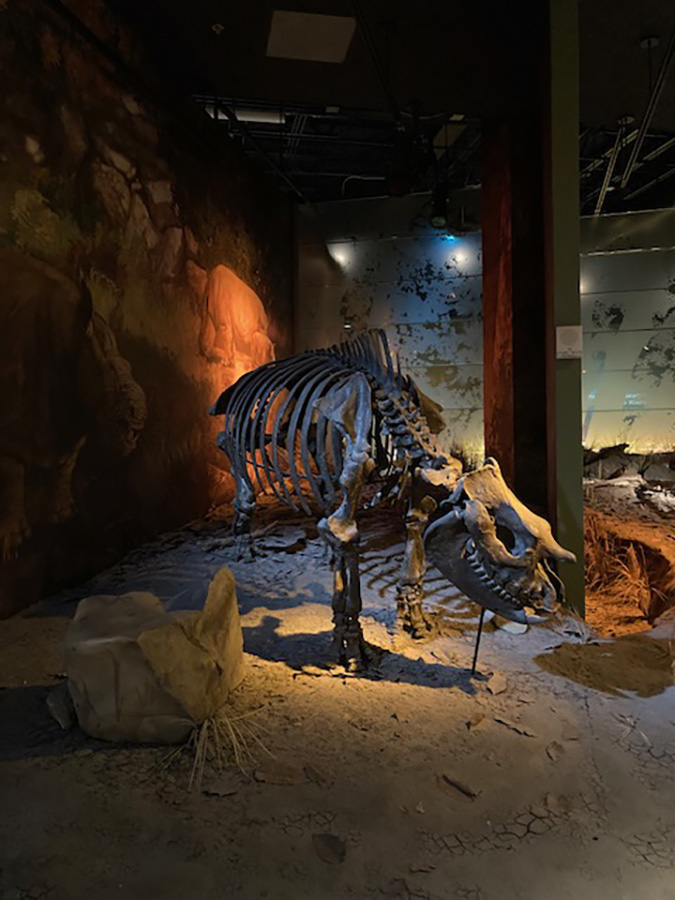
The skeletal remains of a rhinoceros greets visitors at Gray’s Fossil site. The behemoth roamed East Tennessee more than four million years ago
|
|
Only four months later, Governor Don Sundquist announced the highway would be rerouted and the fossil site would be developed and preserved for education and research. The state later provided a grant of $8 million to the University of East Tennessee to fund preservation and research. In 2007, the Gray Fossil Site and Museum was opened to the public and soon caught the attention of tourists the world over.
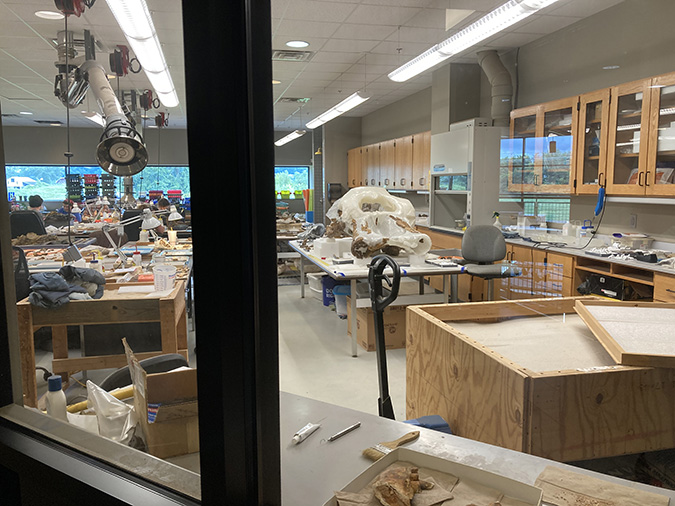
Paleontologists at work in the Dinosaur Museum laboratory
|
|
Stepping inside the museum lobby visitors encounter the skeleton of a giant short-faced bear estimated to have weighed in excess of 2,000 pounds. Standing on his hind legs he towers an astounding 12 feet tall. He stands next to a stuffed bear that pales in comparison to its giant ancestor.
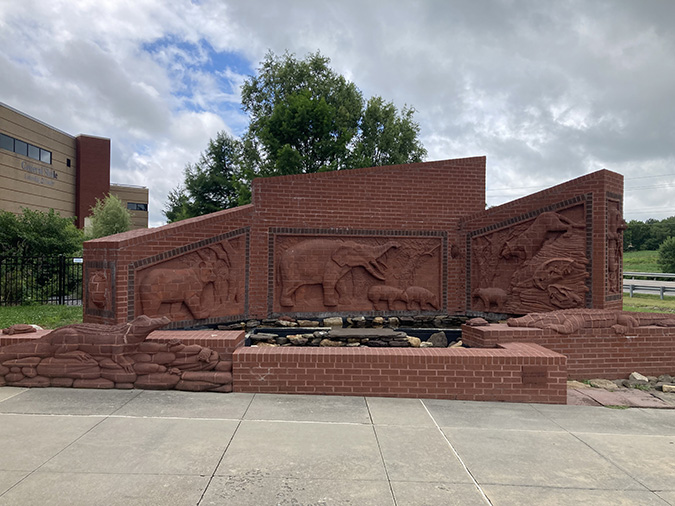
Dinosaur Museum
|
|
Stepping inside the museum there are several displays containing fossilized turtles, alligators, a mastodon’s rib, vertebra, birds and other reptiles and mammals. Stepping into the next room are the reconstructed skeletal remains of a rhinoceros, a saber-toothed tiger, alligators, and tapirs. In fact, Gray’s has the largest collection of tapir fossils than any other site. The site contains a nearly complete mastodon skeleton. The fossils are from the early Pliocene era dating back 4.5-4.9 million years. The mastodons resembled modern day elephants and were mostly wiped out following the ice age. With the emergence of man, the last of the mastodons were hunted to extinction to provide ample food for the growing population of Native Americans that came to inhabit the region following the ice age.
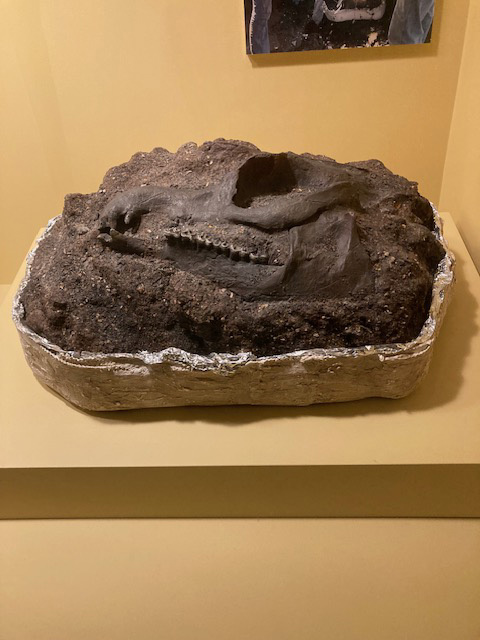
This tapir skull was one of several found in the limestone pit in Gray.
|
|
The site has discovered many facts that reveal how prehistoric creatures lived and the environment and even addresses the complicated issue of climate change. The fossil collection includes several alligators that inhabited the swampy areas of the site. Alligators are prevalent in warmer climates and cannot survive in cooler climates. Scientists believe the average temperature at the area now known as Gray’s was 63 during the era these creatures walked the Earth 4-5 million years ago. Today the average temperature at Gray’s is 55 degrees reflecting a cooler climate which contrasts the concept of global warming.
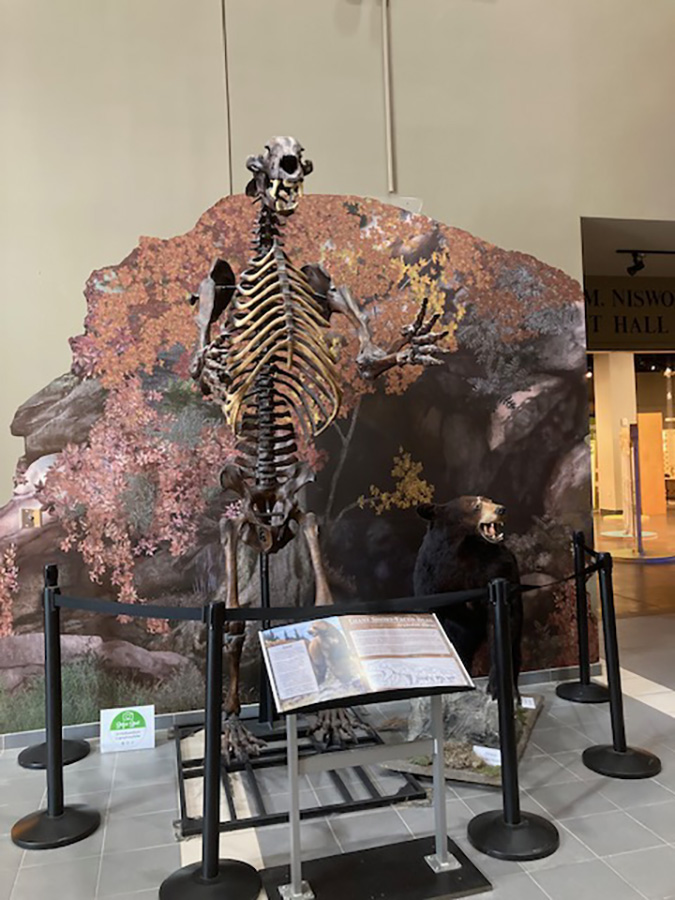
Bear
|
|
Upstairs is the research area where a team of paleontologists diligently remove sediment and calcified formations from the fossils to reveal the ancient animals that lay beneath. Once the fossils are cleaned and catalogued, researchers begin carefully reassembling the fossils in hopes of creating a full skeleton. The room is filled with numerous crates containing various bones and other artifacts from the era. Large windows allow visitors to peer into the room and watch as the team reconstruct the past like detectives on a quest to resolve a mystery.
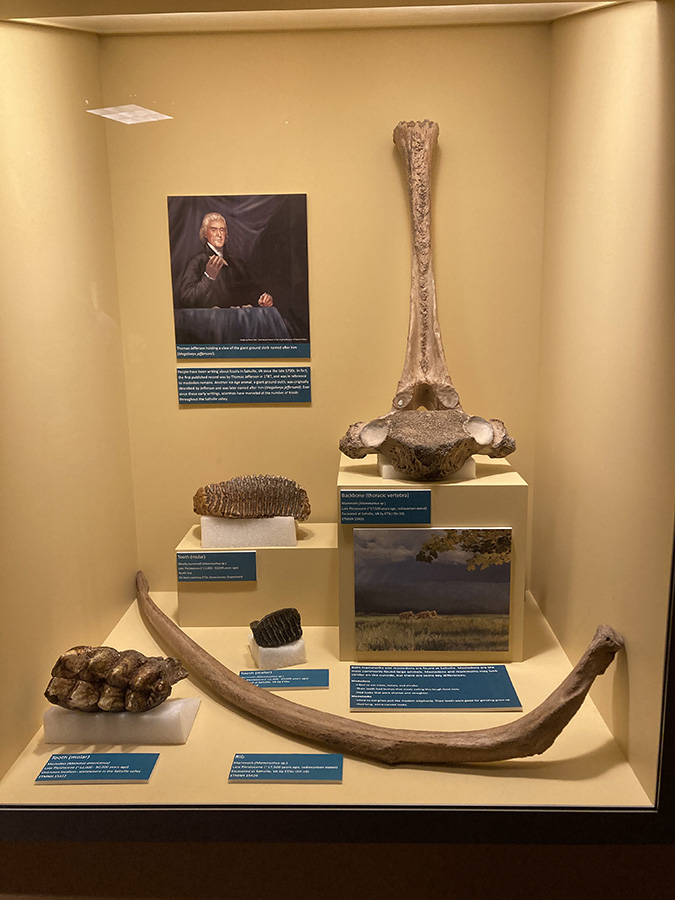
Mammoth and mastodone fossils
|
|
More than 200 species of extinct prehistoric animals, insects and plants have been discovered in the site in the form of more than 30,000 fossils that was preserved in ancient limestone deposits. Currently only one percent of the site has been excavated and experts believe it could take as much as a century to finish excavating the site.
The site also features hands on exhibits intended for younger visitors to educate and inform as well as entertain. For more information visit the website www.etmnh.org.
|