By Tom Adkinson
June 5, 2026
 |
|---|
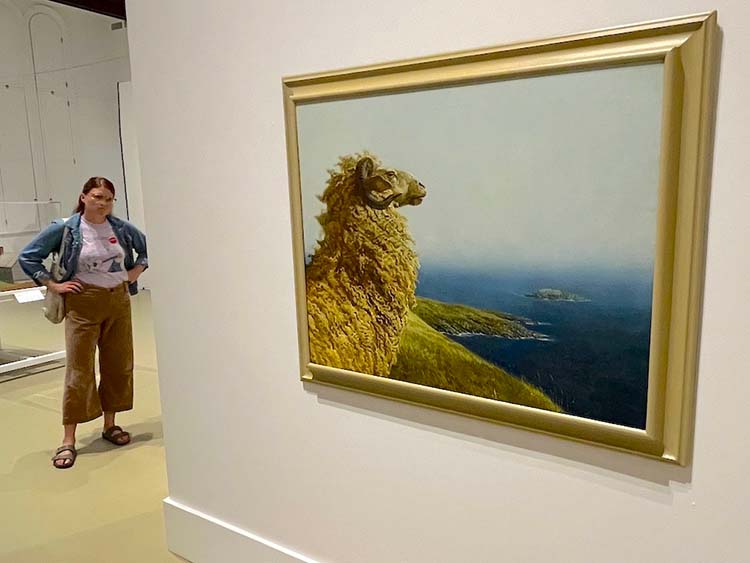
| A Farnsworth Museum visitor assesses a painting while Jamie Wyeth’s image of a wild ram awaits her around the corner. Image by Tom Adkinson |
ROCKLAND, Maine – Small towns often hold big treasures. Consider tiny Rockland and the Farnsworth Museum. Rockland’s population is 7,035, and the Farnsworth Museum houses a nationally recognized collection of almost 16,000 works from many of America’s greatest artists, notably an extensive collection of Maine works by three generations of Wyeths – N.C., Andrew, and Jamie. Both are gems in Maine’s Midcoast region.
 |
|---|
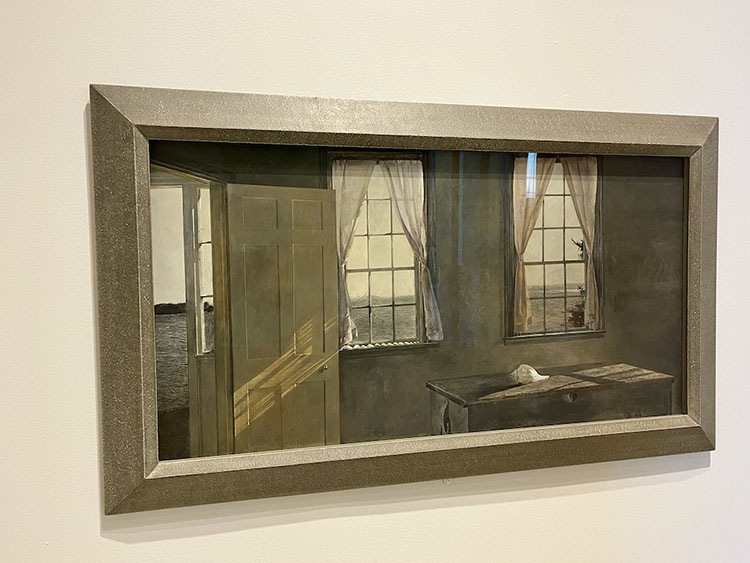
| The Farnsworth’s 1964 $65,000 purchase of Andrew Wyeth’s tempera painting, “Her Room,” was the highest price to date paid by an institution for a work by a living artist. Image by Tom Adkinson |
The Farnsworth Museum is the legacy of the widow of a 19th-century merchant. Lucy Copeland Farnsworth was the last surviving member of a family that settled in Rockland in 1850 and made its money in lime kilns, quarrying, shipping, and real estate.
She died in 1935 and left an estate of $1.3 million ($31.6 million in today’s world) and earmarked part of it for an art museum in the only town she ever knew as home. Another part of the money went to open the Farnsworth home, a Greek Revival home filled with Victorian furnishings. It was the first house in Rockland to have hot and cold running water and was the town’s first historic house opened to the public.
 |
|---|
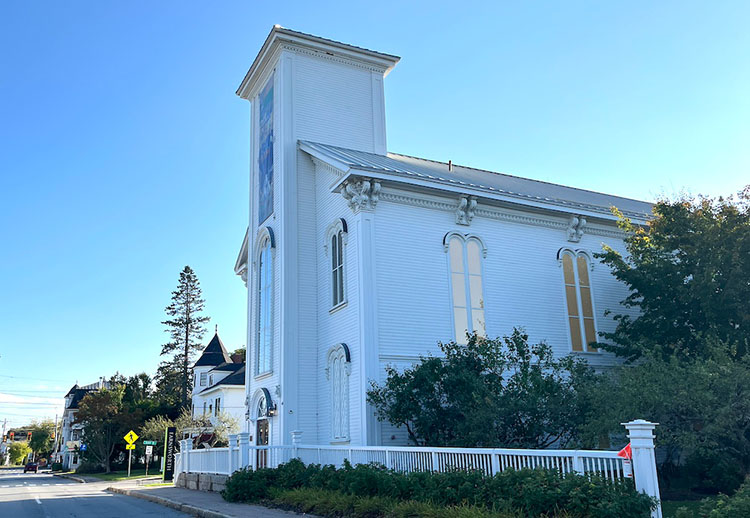
| What once was a United Methodist church from the late 1800s now houses the Wyeth Center, which offers special exhibitions in Maine’s tourist season. Image by Tom Adkinson |
World War II delayed the construction of the museum, but the desire to begin a collection was strong. The museum bought its first work by Andrew Wyeth in 1944 for $175.
The museum opened in 1948, and Andrew Wyeth’s first solo museum exhibition was at the Farnsworth three years later.
The museum’s affinity for Wyeth work continued, and in 1964, it paid $65,000 for Andrew Wyeth’s tempera painting, “Her Room.” At that time, it was the highest price ever paid by an institution for a work by a living artist.
 |
|---|
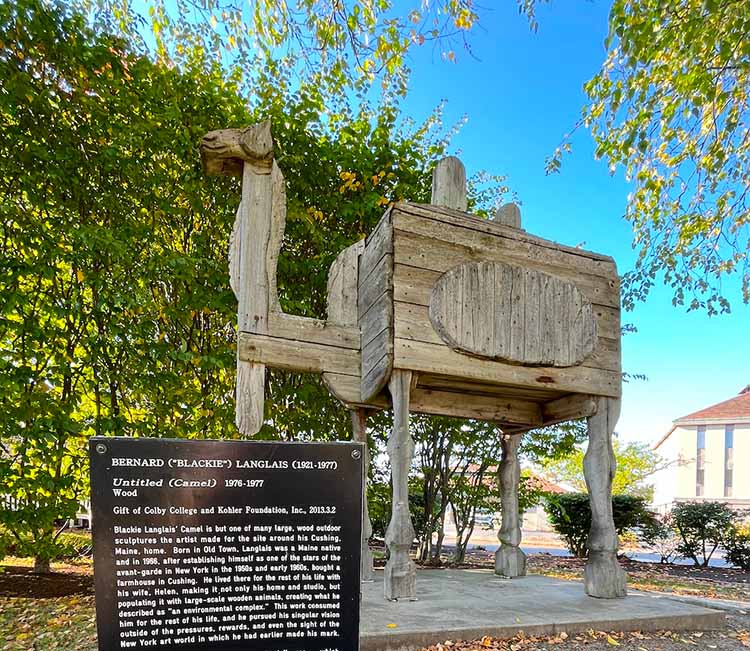
| The Farnsworth collection includes outdoor pieces such as this stylized camel by Maine sculptor Bernard “Blackie” Langlais. Image by Tom Adkinson |
In the 1990s, the museum expanded with the adaptive reuse of a historic United Methodist church from the late 1800s into what is now the Wyeth Center. It operates seasonally, and a special exhibition in 2026 is devoted to Betsy James Wyeth, wife of Andrew Wyeth. Her creativity was in design, and part of the exhibition is about her influence on the Olson House, the setting for Andrew Wyeth’s famous “Christina’s World” painting.
(The Olson House, a Farnsworth Museum holding about 30 miles away in the town of Cushing, normally is open for tours but is closed this year for interior restoration work.)
 |
|---|
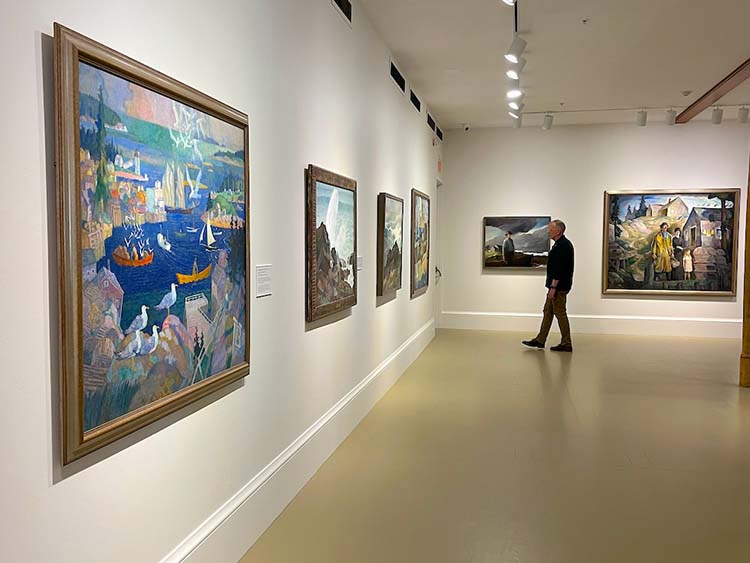
| The spacious galleries at the Farnsworth Museum permit the display of diverse works for progressive contemplation. Image by Tom Adkinson |
Lucy Copeland Farnsworth probably never dreamed that Rockland’s place in the art world would reach today’s heights. A second major art institution, the Center for Maine Contemporary Art (CMCA), opened in 1952 with a focus on emerging and contemporary artists with ties to Maine. Rather than having a permanent collection, the CMCA offers a constantly changing exhibition schedule.
The combination of the Farnsworth Museum and the CMCA, plus the presence of more than 20 art galleries, inspired The Boston Globe to write about the “Rockland Renaissance” and prompted a local art patron to design a full-page New York Times ad every year highlighting the town.
One of the ads in The New York Times proclaimed, “The Five Capitals of Art: London, Paris, New York, Florence, Rockland.” Following that bold headline was the challenge, “Think we’re kidding? Come see for yourself.”
Trip-planning resources: FarnsworthMuseum.org and VisitMaine.com
(Travel writer Tom Adkinson’s book, 100 Things To Do in Nashville Before You Die, is available at Amazon.com.